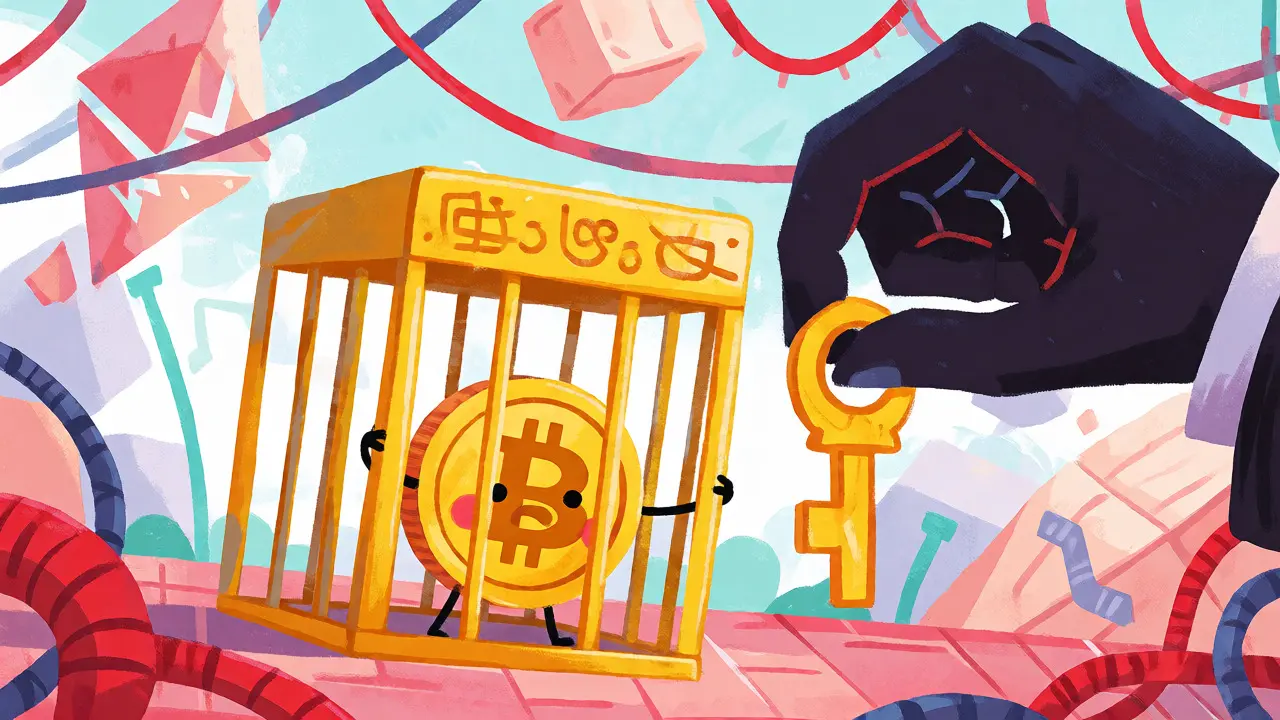
You bought Bitcoin because you wanted to escape the banks. You wanted self-custody. Then you moved your BTC into Ethereum DeFi to earn yield, and suddenly, a company in San Francisco is holding your money. This isn't just an inconvenience; it's a fundamental contradiction of why you entered crypto in the first place. Wrapped tokens are the bridge between blockchains, but they come with a toll booth manned by centralized entities. If that entity freezes, gets hacked, or goes bankrupt, your "decentralized" asset is gone.
The Hidden Cost of Interoperability
Let's be real about what a wrapped token actually is. It’s not magic. When you use WBTC, you aren’t holding Bitcoin on the Bitcoin network anymore. You’re holding an ERC-20 token on Ethereum that represents a claim on Bitcoin held somewhere else. That "somewhere else" is usually a vault controlled by a third party.
This setup solves a real problem: Bitcoin doesn't have smart contracts like Ethereum does. To use Bitcoin in DeFi lending or trading, you need it to speak Ethereum's language. But the translation service? It’s run by humans with private keys. According to Transak’s 2023 analysis, 92% of wrapped Bitcoin implementations rely on centralized custodians. Only a tiny fraction use decentralized methods. So when you hear people talk about "trustless" DeFi, remember that for most wrapped assets, trust is very much required.
Who Actually Holds Your Keys?
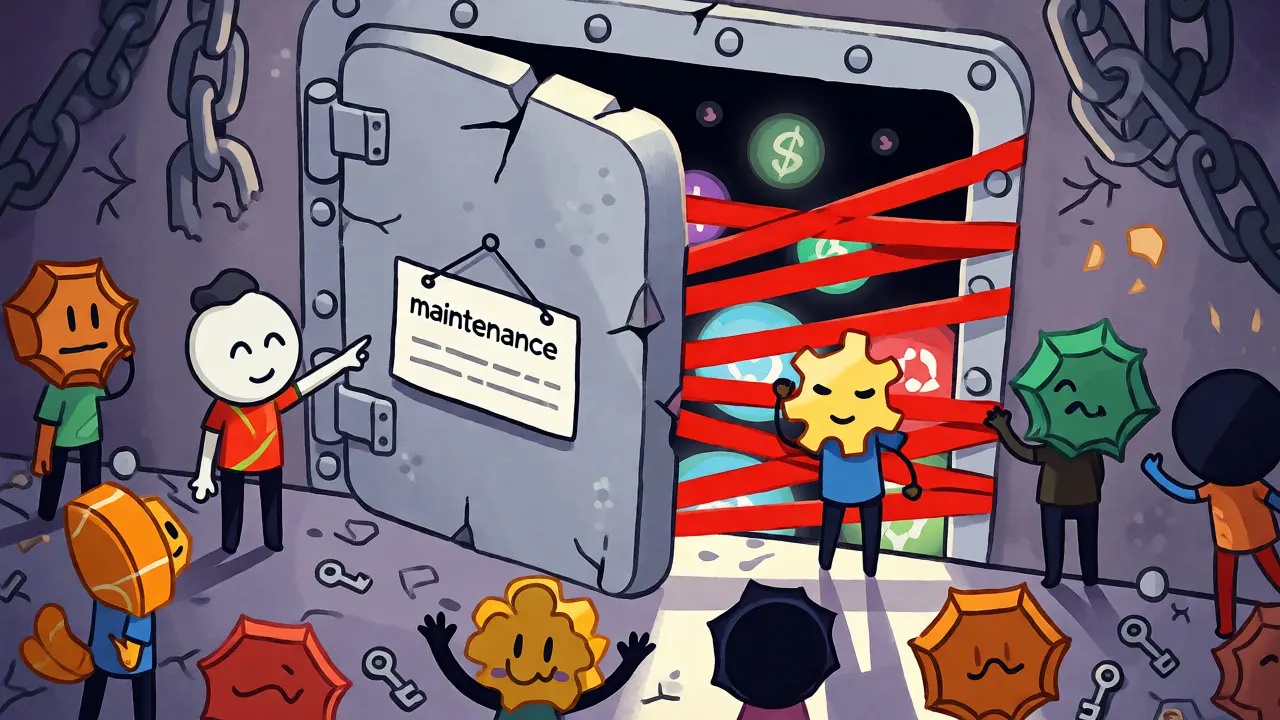
For the biggest player, BitGo, the custody model is straightforward but risky. BitGo holds the actual Bitcoin in cold storage. They issue WBTC on Ethereum at a 1:1 ratio. Sounds simple, right? But here’s the catch: if BitGo decides to pause withdrawals for a security audit, your funds are stuck. Twitter user @DeFiWatcher documented how a friend lost access to $15,000 in WBTC during a 72-hour maintenance window. You can't trade, you can't move, and you can't withdraw. You're at their mercy.
It’s not just about downtime. It’s about solvency and honesty. What if the custodian loses the keys? What if they get subpoenaed by regulators and forced to freeze specific wallets? The SEC issued 17 subpoenas to wrapped token custodians in Q2 2023 regarding asset segregation. These aren't hypothetical fears; they are operational realities.
Centralized vs. Decentralized Custody Models
Not all wrapped tokens are created equal. Some try to mitigate this risk by using decentralized tech, but they come with their own headaches. Let's look at the trade-offs.
| Token | Custody Model | Redemption Time | Key Risk Factor |
|---|---|---|---|
| WBTC | Centralized (BitGo) | 15-30 minutes | Single point of failure; KYC required |
| renBTC | Decentralized (sMPC) | 2-4 hours | Smart contract bugs; lower liquidity |
| tBTC | Threshold Signatures | Variable | Complex minting process; higher fees |
| sBTC | Hybrid (Stacks Miners) | Slow | Limited adoption; miner dependency |
As you can see, there's no free lunch. WBTC offers speed and ease of use, which is why it dominates with 62.5% market share. But you pay for that convenience with counterparty risk. renBTC tries to remove the central custodian using secure multi-party computation (sMPC), meaning no single person holds the key. But it suffered a $0.5 million exploit in 2021 due to cryptographic vulnerabilities. Decentralization reduces human error but introduces code risk.

Real-World Failures and Near Misses
Don't think this is theoretical. In February 2022, the Wormhole bridge was exploited, stealing roughly $320 million in wrapped ETH. The attackers didn't hack Ethereum; they hacked the validation logic of the bridge that managed the custody. It proved that even semi-decentralized systems can fail catastrophically if the verification layer is flawed.
Then there's the mundane stuff. Gas fees. During Ethereum congestion, unwrapping can become a nightmare. A user on Ethereum Stack Exchange reported losing $7,850 because gas fees spiked to 150 gwei, causing their transaction to fail while the custodian's validation window expired. The system worked as designed, but the design didn't account for market volatility. That's a systemic flaw in many custodial models.
How to Protect Yourself
If you're going to use wrapped tokens-and for now, you probably have to-don't put all your eggs in one basket. Here is a practical approach:
- Diversify Custodians: Don't hold 100% of your cross-chain BTC in WBTC. Split it across WBTC, tBTC, and sBTC. Chainalysis recommends this multi-custodian strategy to mitigate single-point failure risks.
- Check Liquidity Before You Commit: Use DefiLlama to check Total Value Locked (TVL). Low TVL means you might struggle to exit your position quickly. sBTC, for example, has only $187 million in TVL compared to WBTC's billions.
- Understand the Fees: Decentralized options often charge higher wrapping fees (0.5-0.8%) compared to WBTC's 0.25%. For small transactions under $1,000, these fees eat into your profits fast.
- KYC Awareness: Remember that WBTC requires KYC for deposits over 0.5 BTC. If privacy matters to you, centralized wrapped tokens might not be the right fit.
The Future: Can We Fix This?
The industry knows this is a problem. New protocols are trying to solve it. Chainlink’s Cross-Chain Interoperability Protocol (CCIP) launched in late 2023 with a focus on decentralized verification using Proof-of-Reserve oracles. The goal is to verify that the backing assets exist without trusting a single bank-like entity. However, it currently supports only $420 million in value, so it's still early days.
There's also hope from native solutions. The Ethereum Foundation is exploring mechanisms that could eventually eliminate the need for wrapped tokens entirely by allowing better cross-chain communication natively. Until then, we're stuck with bridges and custodians. Gartner predicts that by 2025, 3-4 major custodians will control 85% of the market. That concentration increases systemic risk. If one fails, it could drag down the whole sector.
Frequently Asked Questions
Is WBTC truly decentralized?
No, WBTC is not fully decentralized. While the token exists on Ethereum, the underlying Bitcoin is held by BitGo, a centralized custodian. Users must trust BitGo to manage the reserves honestly and securely. Recent governance changes have added more oversight via a DAO, but the core custody remains centralized.
What happens if the custodian goes bankrupt?
If a custodian like BitGo goes bankrupt, your wrapped tokens could lose their peg or become worthless. Unlike fiat-backed stablecoins, there is no FDIC insurance for crypto custodians. You would likely become an unsecured creditor in bankruptcy proceedings, meaning you might recover only a portion of your assets, if any.
Why do some wrapped tokens require KYC?
Centralized custodians operate under regulatory frameworks similar to traditional financial institutions. To comply with anti-money laundering (AML) laws, they must verify the identity of users depositing significant amounts. For WBTC, this applies to deposits exceeding 0.5 BTC. This contrasts with the pseudonymous nature of native blockchain transactions.
Are decentralized wrapped tokens safer?
They reduce counterparty risk but increase technical risk. Protocols like renBTC use complex cryptography (sMPC) to avoid a single custodian. However, this introduces the risk of smart contract bugs or cryptographic failures. Additionally, decentralized options often suffer from lower liquidity and slower redemption times, which can be problematic during market crashes.
Can I unwrap my tokens instantly?
Not always. Redemption times vary by protocol and network conditions. WBTC typically takes 15-30 minutes, but this can extend if the custodian is undergoing maintenance or if Ethereum gas fees are extremely high. Decentralized alternatives like renBTC can take several hours due to the time needed for multi-party computations to finalize the transaction.