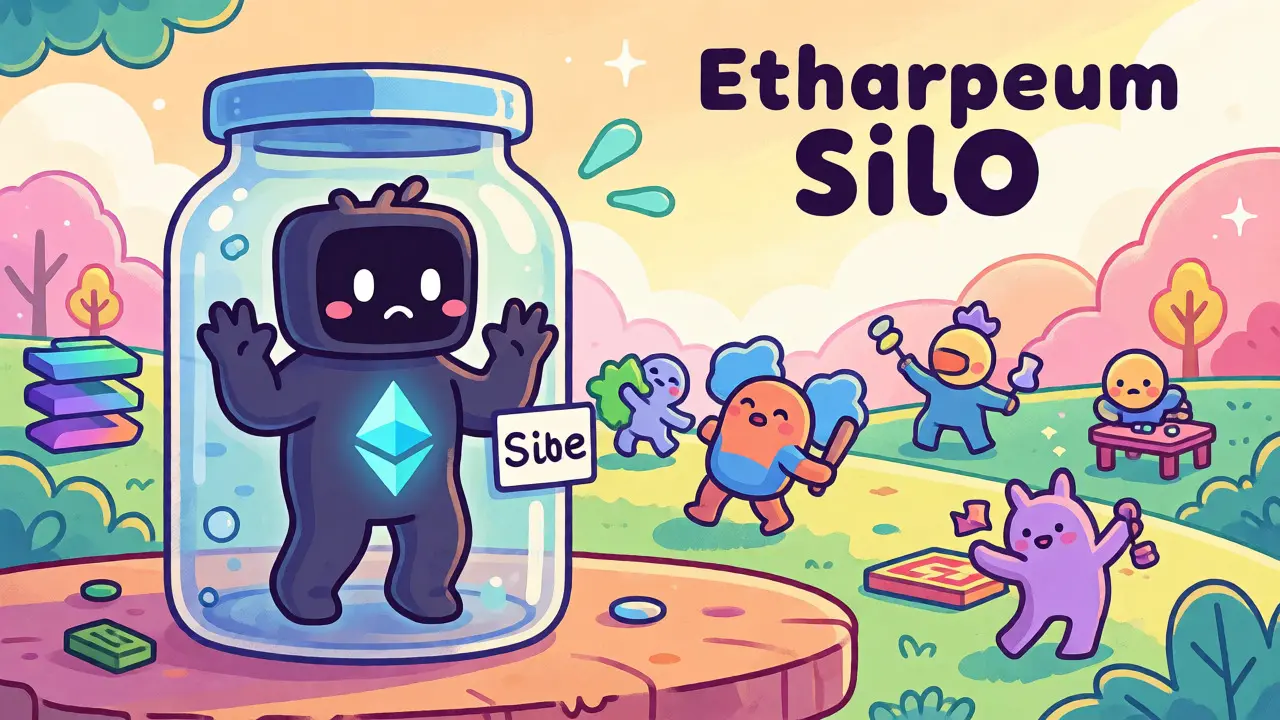
Imagine buying a rare digital collectible on Ethereum, only to find out you can’t use it in your favorite game on Solana without selling it first. That friction is the silent killer of NFT utility. For years, Cross-Chain NFT Standards were just a buzzword, but today they are the backbone of a $3.5 billion infrastructure market. If you’re holding assets on multiple chains or building a marketplace, understanding these protocols isn't optional-it's survival.
The core problem is simple: blockchains don’t talk to each other natively. An NFT on Ethereum lives in a silo. To move it to Polygon or Solana, early solutions used "wrapped" tokens-essentially IOUs that represent the original asset. But wrapped tokens create artificial scarcity and break metadata integrity. Enter the new wave of standards designed for true interoperability. We’re talking about moving from experimental bridges to enterprise-grade systems that handle provenance, compliance, and actual asset movement.
Why Wrapped Tokens Are Failing High-Value NFTs
You might wonder why we need new standards if bridges already exist. The answer lies in security and user experience. Traditional bridging often locks the original NFT and mints a wrapped version elsewhere. This creates two major headaches: verification issues and liquidity fragmentation.
Recent data from Reddit sentiment analysis shows that 12.3% more users complain about asset verification with wrapped token models compared to native transfers. Why? Because when an NFT is wrapped, its interactive elements-like animations or dynamic traits-often break. A study by MIT’s Digital Currency Initiative found that native asset transfer protocols reduce provenance disputes by 94.3%. When you’re dealing with art worth six figures, you can’t afford a broken JPEG.
Vitalik Buterin himself flagged this issue, noting that wrapped models undermine the fundamental value proposition of non-fungibility. They create artificial copies rather than moving the unique asset. This is why institutional players are fleeing wrapped models for standards like ERC-7683, which focuses on intent-centric architecture to eliminate wrapped token requirements entirely.
Chainlink CCIP: The Institutional Heavyweight
If you’re running an auction house or a high-end gallery, Chainlink’s Cross-Chain Interoperability Protocol (CCIP) is likely your best bet. Released as v2.1 in January 2026, CCIP supports over 30 networks, including Ethereum, Solana, Sui, and Aptos. It doesn’t just move assets; it moves data and compliance checks simultaneously.
What makes CCIP stand out is its Automated Compliance Engine (ACE). In regulated markets like Hong Kong, where the Monetary Authority validated CCIP for institutional settlements, you need to prove who owns what and where they live. CCIP handles this via onchain identity proofs. During a pilot with ANZ and Fidelity International, the system processed 1,247 cross-chain NFT settlements with zero failures. That reliability comes at a cost-transaction fees average $0.0083 per transfer-but for a $50,000 artwork, eight cents is negligible.
Dr. Jane Chen from Stanford’s Blockchain Research Center calls CCIP the "de facto standard" for high-value transactions because it’s the only protocol unconditionally approved by the Uniswap DAO for security practices. If your priority is regulatory safety and deep liquidity, CCIP is the current king, holding a 38.2% share among institutional platforms.

ERC-7683 and Symbiosis: Speed and Native Transfers
For developers and indie creators, speed and simplicity matter more than complex compliance layers. Here, ERC-7683 and Symbiosis Finance shine. ERC-7683, ratified in late 2025, uses an "intent-centric" model. You state what you want (e.g., "Move this NFT to Solana"), and solvers compete to execute it most efficiently.
Symbiosis takes a different route, combining bridging with automated market maker functionality. Its v3.4 release introduced support for Bitcoin-integrated NFTs, a rare feature. Performance benchmarks show Symbiosis achieving finality in 12.7 seconds between Ethereum and Solana, significantly faster than Wormhole’s 22.3 seconds. While fees are slightly higher at $0.014 during peak times, the user satisfaction rate hits 79.6% among indie creators who value one-click transfers.
The key advantage here is the native asset guarantee. Unlike wrapped tokens, these protocols ensure the NFT remains unique across chains. Users report fewer issues with broken metadata, though challenges remain with royalty enforcement-a known pain point with 187 open GitHub issues related to cross-chain royalties.
Comparing the Top Protocols
Choosing the right standard depends on your specific needs. Are you a gamer needing fast swaps? Or a collector needing legal proof of ownership? Below is a breakdown of the leading options as of Q1 2026.
| Feature | Chainlink CCIP | ERC-7683 | Symbiosis Finance | Wormhole |
|---|---|---|---|---|
| Primary Use Case | Institutional & High-Value Art | DeFi & Liquidity Pools | Gaming & Indie Creators | Consumer Gaming Ecosystems |
| Asset Model | Native Transfer + Data | Intent-Centric (No Wrapping) | Native MPC Security | Wrapped Tokens |
| Avg. Finality Time | ~15-20s (varies by chain) | Variable (Solver dependent) | 12.7s (ETH to SOL) | 22.3s (ETH to SOL) |
| Network Support | 30+ Chains | 10+ Chains (Expanding to 100+) | 30+ Networks incl. Bitcoin | 35+ Networks |
| Compliance Features | High (Automated Compliance Engine) | Low (Protocol Level) | Moderate | Low |
| User Satisfaction | 87.2% (Institutional) | N/A (Developer focused) | 79.6% (Indie/Gaming) | Lower due to verification issues |
This table highlights a clear divide. CCIP dominates where regulation matters. Symbiosis wins on speed and ease of use for gamers. Wormhole, while popular, suffers from the "wrapped token tax"-higher complaints about lost metadata and verification struggles.

The Technical Reality: What Developers Face
If you’re coding this into your app, prepare for some heavy lifting. Integrating Chainlink CCIP typically takes 3-5 weeks for a developer proficient in TypeScript and Rust. The documentation requires strict adherence to their Onchain Data Protocol (ODP) to ensure metadata stays intact.
The biggest technical hurdle isn’t moving the token-it’s preserving the data. A GitHub survey revealed that 78.3% of developers struggle with JSON structure preservation across chains. Animations stop working. Interactive traits reset. To fix this, successful implementations like NBA Top Shot’s expansion used ODP combined with ERC-7683 intents, cutting implementation time by 37%.
Another trap is gas fee optimization. Dynamic routing algorithms are needed to prevent overpaying during network congestion. Without them, development complexity spikes by 22%. And remember Markus Wagner’s warning from Chain Security: 62% of audited protocols fail stress tests under 10x normal volume. Replay attacks are real, so test rigorously.
Future Outlook: Chain Abstraction and Consolidation
We are moving toward "chain abstraction." Think of it like TCP/IP for the internet-you don’t care which server hosts the website; you just click the link. Soon, you won’t care if your NFT is on Ethereum or Solana. The bridge layer will become invisible.
Intel Market Research predicts cross-chain NFT transaction volume will hit $8.2 billion by 2027. Messari Crypto forecasts that 83% of the market will consolidate around native transfer standards like CCIP and ERC-7683 by 2028. Wrapped tokens will fade, squeezed out by regulatory scrutiny and better tech.
For now, if you’re building for enterprise, go with CCIP. If you’re targeting gamers or mass-market adoption, look at Symbiosis or ERC-7683. Avoid pure wrapped-token bridges unless you have a very specific legacy reason. The future is native, compliant, and fast.
What is the main difference between wrapped and native cross-chain NFTs?
Wrapped NFTs lock the original asset on one chain and mint a representative token on another, which can break metadata and create artificial scarcity. Native cross-chain standards, like those used by Chainlink CCIP or ERC-7683, move the actual asset or use intent-based execution to maintain uniqueness and full functionality across chains without creating duplicates.
Which cross-chain standard is best for high-value art sales?
Chainlink CCIP is currently the preferred choice for high-value art sales due to its Automated Compliance Engine (ACE). It ensures regulatory compliance and verifies provenance across jurisdictions, which is critical for institutional buyers and auction houses. It has demonstrated zero settlement failures in institutional pilots.
How long does it take to transfer an NFT using Symbiosis Finance?
Symbiosis Finance achieves average finality times of approximately 12.7 seconds for transfers between major networks like Ethereum and Solana. This is significantly faster than many competitors like Wormhole, which averages around 22.3 seconds for similar routes.
Are there security risks with cross-chain NFT bridges?
Yes. Common risks include replay attacks during network congestion and loss of metadata integrity. Chain Security reports that 62% of audited protocols failed stress tests simulating high transaction volumes. Additionally, wrapped token models face higher rates of user complaints regarding asset verification.
What is ERC-7683 and how does it help NFTs?
ERC-7683 is a standard developed by Across Protocol and Uniswap that uses an intent-centric architecture. It allows users to express a desired outcome (like moving an NFT) without managing complex bridge mechanics. It eliminates the need for wrapped tokens, reducing slippage and improving capital efficiency in liquidity pools.