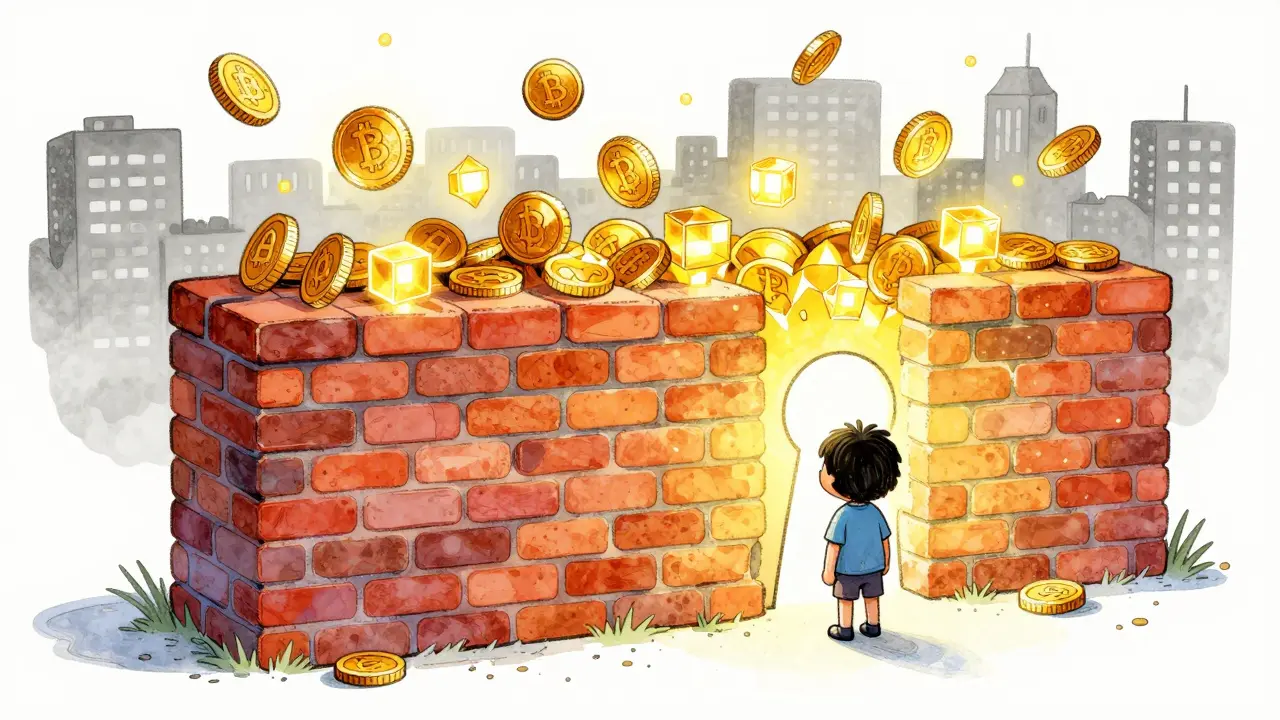
Imagine waking up to find that the digital wallet holding your life savings is now a legal liability. For millions of people, this isn't a hypothetical scenario-it's their daily reality. While we often talk about the global adoption of blockchain, there is a massive, invisible wall of legislation blocking a huge chunk of the world's population from accessing these tools. In fact, about 18% of the global population lives under some form of countries where crypto is illegal or severely restricted.
Whether it's a total ban on possession or just a rule saying you can't buy a coffee with Bitcoin, the legal landscape is a chaotic patchwork. Governments aren't just guessing; they are fighting a battle for monetary sovereignty and financial stability. But as the technology evolves, the line between "illegal" and "regulated" is starting to blur. If you're traveling, investing, or moving abroad, knowing where the red lines are is the difference between a successful portfolio and a legal nightmare.
The Hard Line: Countries with Total Bans
In some parts of the world, cryptocurrency isn't just discouraged-it's a crime. A total ban typically means that trading, holding, mining, and even owning digital assets is prohibited. These countries view decentralized finance as a direct threat to their national security or economic order.
For instance, China is the most famous example. After a series of crackdowns, they formally prohibited crypto transactions in 2019 and wiped out mining and trading by 2021. The official reason? Energy consumption and carbon emissions. But there's a twist: while they hate private coins, they are obsessed with their own state-controlled digital currency, the digital yuan (e-CNY). They don't hate the tech; they hate the lack of control.
Other nations taking a similar hardline approach include:
- Bangladesh: Under the Money Laundering Prevention Act, the Bangladesh Bank has made it clear that possession or trade is a serious offense, often punishable by years in prison.
- Egypt and Morocco: Both have historically viewed crypto as a tool for illicit financial flows and have maintained strict prohibitions.
- Nepal, Afghanistan, and Algeria: These countries generally ban digital assets to prevent fraud and maintain a grip on their fragile financial systems.
- Bolivia, Tunisia, and Iraq: Similar to the above, these nations prioritize financial stability over the potential gains of decentralized finance.
The Middle Ground: Partial Restrictions and "Payment Bans"
Not every restriction is a total blackout. Many countries have adopted a "yes, but..." approach. They might let you hold Bitcoin as an investment (like a stock), but the moment you try to use it to pay for a hotel room or a laptop, you're breaking the law.
This is where things get confusing. Take India and Russia. These jurisdictions have moved toward severe limitations. You might be able to trade on an exchange, but using these assets as a legal tender for payments is strictly forbidden. This allows the government to tax the gains without losing control over the daily economy.
Then there's the "Banking Prohibition Model." In this scenario, the government doesn't necessarily put you in jail for owning a coin, but they make it impossible for you to move money between your bank account and a crypto exchange. Turkey implemented this in 2021. As the Turkish lira crashed and people flocked to crypto as an inflation hedge, the central bank stepped in to ban crypto as a payment tool. It wasn't a ban on the assets themselves, but a strategic move to stop the local currency from becoming irrelevant.
| Model Type | What is Illegal? | Typical Example | Primary Goal |
|---|---|---|---|
| Total Ban | Holding, Trading, Mining | China, Bangladesh | Total State Control |
| Partial Restriction | Payments/Commerce | India, Russia | Taxation & Stability |
| Banking Prohibition | Bank-to-Exchange Transfers | Turkey, Vietnam | Prevent Capital Flight |
Why Do Governments Actually Ban Crypto?
It's rarely about the technology itself. If it were, these countries wouldn't be exploring Blockchain for supply chains or government records. The real beef is with the implications of decentralization.
First, there's the issue of Monetary Sovereignty. A central bank's power comes from its ability to control the money supply. If citizens move their wealth into a global asset like Bitcoin, the government loses its ability to manage inflation or steer the economy. In countries with hyperinflation, crypto is a lifeboat; for governments, that lifeboat is a leak in their authority.
Second is the fight against Money Laundering and Tax Evasion. Because crypto can be transferred pseudonymously, it's a dream for people trying to hide assets from the taxman. In Bangladesh, for example, the government argues that the inability to integrate these assets into existing economic frameworks makes them a liability for national security.
Finally, there's the Fraud Factor. Before the big institutional players arrived, the crypto space was the Wild West. Many governments banned the tech after their citizens lost millions in "get rich quick" schemes and fraudulent ICOs. When President Erdoğan declared "war on crypto" in Turkey, it followed a wave of arrests involving fraudsters, showing that enforcement is often a reaction to public outcry over scams.
Life in the "Grey Market": How People Cope
Here is the funny thing about decentralization: you can't really "ban" a math equation. Even in the strictest jurisdictions, underground markets thrive. In countries where crypto is illegal, users often turn to VPNs (Virtual Private Networks) to mask their location and access global exchanges. They use Peer-to-Peer (P2P) networks, trading cash for coins in person or via private messaging apps like Telegram.
But this comes with huge risks. In Vietnam, while the government hasn't fully criminalized possession, the State Bank of Vietnam prohibits the use of crypto as payment. People caught doing so can face fines ranging from 150 million to 200 million VND (roughly $6,500 to $8,800). For a casual user, that's a devastating blow.
The frustration is palpable in online forums. Tech-savvy youth in banned countries often feel they are being robbed of an economic opportunity. They see the growth of hubs like Dubai or Switzerland and realize their own countries are falling behind in the global race for blockchain innovation.

The Path Toward Liberalization
Is the era of total bans coming to an end? Maybe. We are seeing a shift from "Ban Everything" to "Control Everything." This is the "Regulatory Capture" phase.
Indonesia is a great example. Instead of just banning the stuff, they've moved toward developing a national cryptocurrency exchange. By creating a state-sanctioned environment, they can still restrict payments but allow the government to track every single transaction and collect taxes. It's a move from a wall to a gate.
Vietnam is also showing signs of softening. Despite the current payment bans, officials have hinted at plans to create a formal regulatory framework. When a government realizes that banning a technology only pushes the activity into the shadows (where they can't tax it), they usually decide that regulation is more profitable than prohibition.
The pressure is coming from two sides: the economic loss of not attracting blockchain startups and the persistent demand from a young, digitally native population. As more multinational companies like Microsoft or PayPal integrate digital assets, the economic pressure on restricted nations grows. It's hard to tell your citizens that a technology is "illegal" when the biggest companies in the world are using it to run their businesses.
Can I be arrested for owning crypto in a banned country?
Yes, in several jurisdictions like Bangladesh or China, the laws are strict and can lead to heavy fines or imprisonment. Laws vary by country; some ban only the trading, while others ban the mere possession of digital keys.
Does a ban on crypto mean blockchain is also illegal?
Not necessarily. Many countries, most notably China, ban private cryptocurrencies like Bitcoin but actively promote and develop blockchain technology for government use and their own Central Bank Digital Currencies (CBDCs).
Is using a VPN legal to bypass crypto bans?
This depends entirely on the local law. While a VPN might hide your traffic from an ISP, the act of trading crypto in a banned jurisdiction remains illegal regardless of how you access the site. You are still breaking the financial laws of that country.
Why do some countries allow investing but ban payments?
Governments do this to prevent crypto from replacing the national currency. By allowing it as an investment, they can tax capital gains. By banning it as a payment method, they ensure that the local currency remains the only way to conduct business and pay taxes.
Which countries are the most "crypto-friendly" as alternatives?
Countries like El Salvador (where Bitcoin is legal tender), the UAE, Switzerland, and Singapore have created comprehensive legal frameworks to attract blockchain investment and innovation.
Next Steps and Troubleshooting
If you find yourself in a region with restrictive laws, the first rule is do your homework. Don't rely on a Reddit thread from three years ago; legal statuses in the crypto world change overnight. Check the official central bank announcements of the country you're in.
For those moving to a partially restricted country, be careful with your bank transfers. If you trigger a "suspicious activity" flag by sending large sums to an exchange, your bank account could be frozen. Use reputable platforms that provide clear compliance documentation.
If you are a business owner looking to operate in these markets, avoid the "grey area." Hiring local legal counsel is a must. The time investment for compliance in countries like Indonesia can exceed six months, but it's better than facing a total shutdown of your operations.


Tyler Webb
April 10 2026It's honestly heartbreaking to think about people risking their freedom just to save their money from inflation. 😔 The struggle is real in those regions.