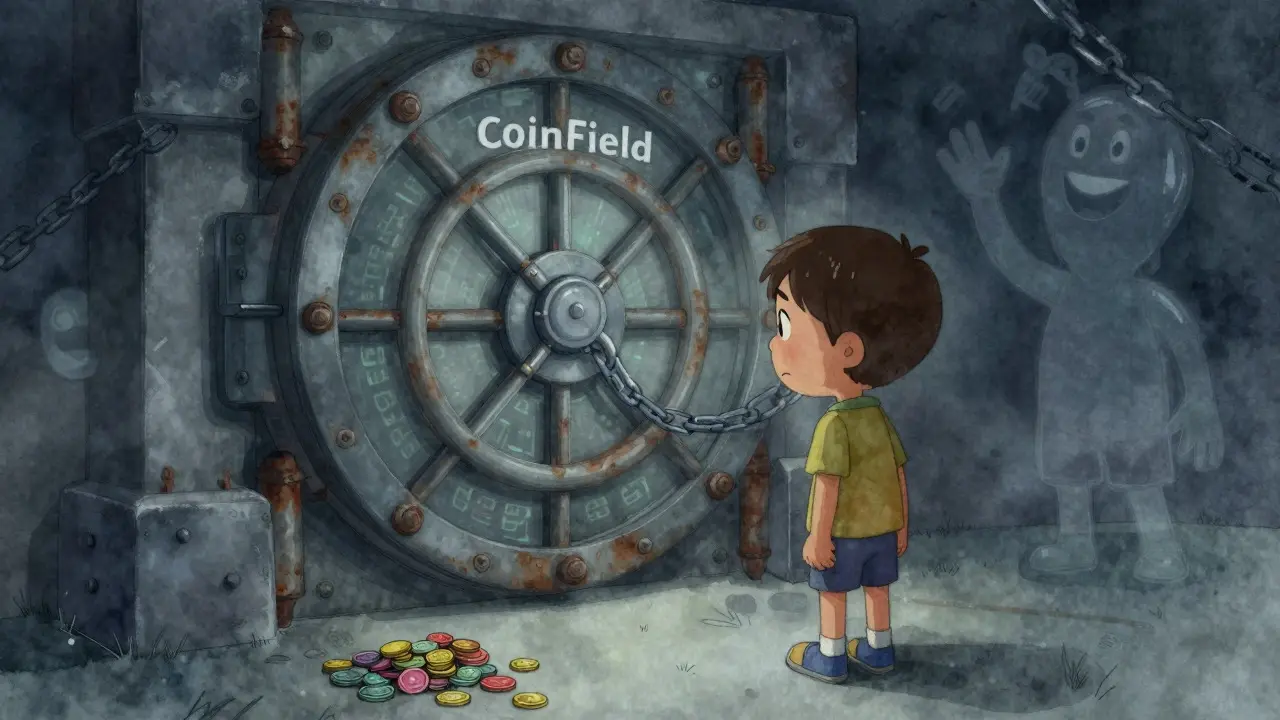
You check your portfolio. The numbers look good. You click 'Withdraw'. Then, nothing happens. Or worse, you get an error message, and suddenly, the website won't load at all. If this sounds familiar, you might be one of the thousands of users who fell victim to CoinField. But here is the hard truth for anyone looking into this platform in 2026: CoinField is widely considered a defunct cryptocurrency exchange that executed an exit scam in late 2023. It is no longer a place where you should keep your money. In fact, it shouldn't even be on your radar as a viable trading option.
We are going to break down exactly what happened, why so many people lost their funds, and what you need to know if you still have assets stuck there. We will also look at how to spot these red flags before they happen to you.
The Quick Reality Check
- Status: Defunct / Scam (as of December 2023).
- Risk Level: Extreme. Avoid at all costs.
- Withdrawals: Frozen or non-existent since late 2023.
- Support: Unresponsive.
- Verdict: Do not deposit. If you have funds there, act immediately to recover them, though chances are slim.
What Was CoinField?
To understand the collapse, we first need to look at what CoinField promised when it launched in January 2018. At its peak, CoinField Exchange positioned itself as a user-friendly bridge between traditional finance and the crypto world. It was marketed heavily as a Canadian-based operation, though some sources pointed to European ties. This ambiguity was one of the first subtle warning signs for regulatory experts.
The platform offered a standard suite of features that looked competitive on paper. They supported around 28 cryptocurrencies, including major players like Bitcoin, Ethereum, Litecoin, and stablecoins like Tether. They had a tiered fee structure with maker fees at 0.15% and taker fees at 0.25%. For context, these fees were slightly higher than industry giants like Binance but lower than some legacy banks trying to enter the space.
They also pushed a proprietary token called SOLO and offered a plastic card system for offline purchases. This sounded innovative. Who doesn't want to buy coffee with their crypto? But innovation without transparency often leads to trouble. The platform claimed to have robust security, including Anti-Money Laundering (AML) checks and Know Your Customer (KYC) verification. Users had to upload passports and proof of address. The idea was trust. Unfortunately, that trust was misplaced.
The Collapse: How the Exit Scam Unfolded
Here is where the story takes a dark turn. For months leading up to December 2023, whispers began circulating in online forums. Users reported slow withdrawals. Then, withdrawals stopped entirely. Support tickets went unanswered. The website started throwing "Error 522" messages-a technical code indicating the server couldn't connect to the origin server. In plain English: the backend was likely shut down.
On December 20, 2023, the writing was on the wall. Major crypto watchdogs, including Cryptowisser, officially moved CoinField to their "Exchange Graveyard." This isn't just a bad rating; it's a declaration of death. The report cited widespread evidence of an exit scam. An exit scam occurs when operators of a financial service deliberately cease operations while keeping user funds. Unlike a bankruptcy where assets are liquidated to pay creditors, an exit scam involves the owners simply vanishing with the money.
Users from Ontario, Canada, and other regions found themselves locked out. Their accounts showed balances, but the 'withdraw' button was dead. Emails bounced back. The silence was deafening. This pattern mirrors other infamous collapses in the crypto history books, such as QuadrigaCX in Canada or FTX globally. The difference? CoinField was smaller, meaning fewer resources for legal recovery and less media attention, leaving victims feeling more isolated.
Red Flags You Might Have Missed
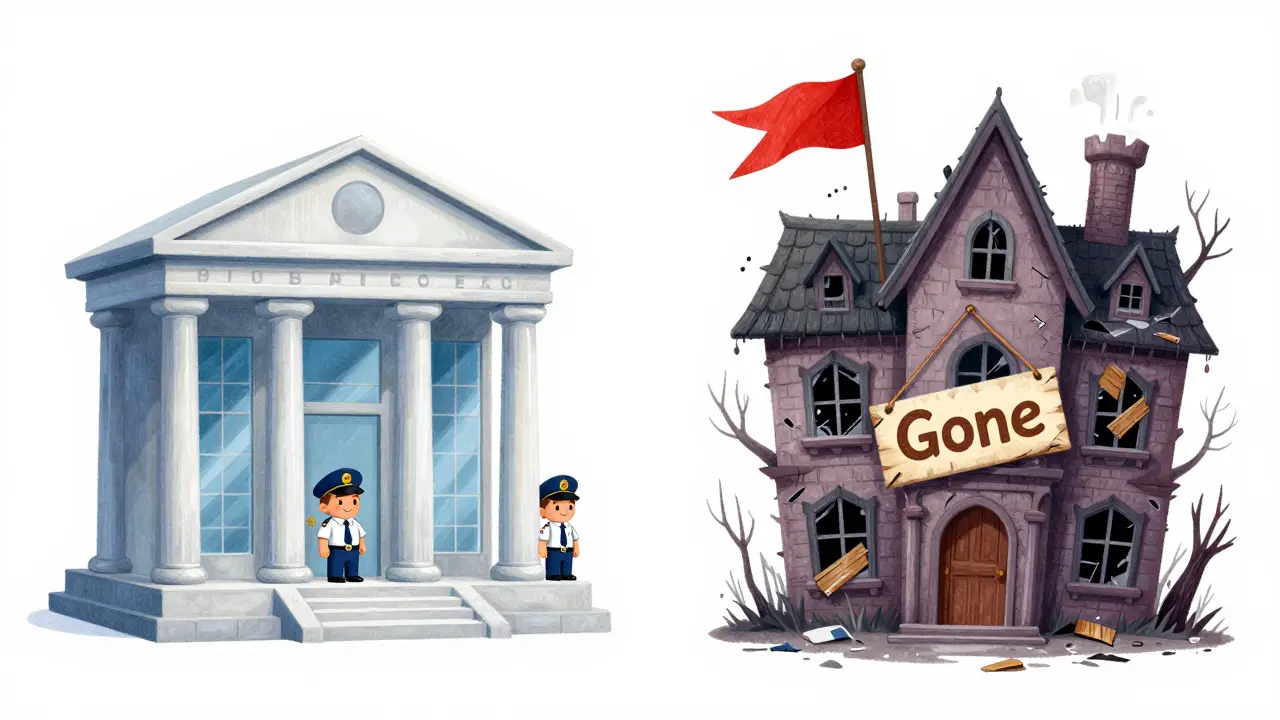
In hindsight, the signs were there. Let’s look at the specific indicators that should have raised alarms. If you are evaluating any exchange now, keep these points in mind.
- Regulatory Ambiguity: CoinField claimed to be Canadian but operated with vague jurisdictional details. Legitimate exchanges clearly state which financial authority regulates them (e.g., FINTRAC in Canada or the SEC/CFTC in the US). CoinField lacked clear public documentation of active regulatory standing.
- Fee Structure Changes: While their fees seemed normal, sudden changes in withdrawal limits or hidden fees often precede a shutdown. Many users reported increased difficulty in verifying accounts right before the crash.
- Unverified Reviews: Even before the collapse, reviews were mixed. On platforms like Reviews.io, the rating hovered around 2.5 out of 5. A healthy exchange usually maintains a 4.0+ rating. Low scores combined with complaints about support are major warning lights.
- The "New Domain" Trap: After the main site died, some unverified reviews mentioned a transition to "coinfield.us.com." Be careful. Scammers often create new domains to lure remaining victims into depositing more money to "unlock" their old funds. As of 2026, there is no credible evidence that this new domain is legitimate or connected to the original entity.
Comparison: CoinField vs. Trusted Alternatives
If you were using CoinField, you probably wanted ease of use and fiat integration. Here is how it stacks up against reliable, regulated alternatives available in 2026. Note that CoinField is included only for historical comparison purposes.
| Feature | CoinField (Defunct) | Kraken | Coinbase |
|---|---|---|---|
| Status | Scam / Closed | Active / Regulated | Active / Publicly Traded |
| Maker Fee | 0.15% | 0.16% - 0% | 0.40% - 0.10% |
| Taker Fee | 0.25% | 0.26% - 0.19% | 0.60% - 0.10% |
| Fiat Support | 6 Currencies (Frozen) | Multiple (USD, EUR, CAD, etc.) | Multiple (USD, EUR, GBP, etc.) |
| Security Proof | None (Post-Collapse) | Proof of Reserves Available | Proof of Reserves Available |
| Customer Support | Non-Responsive | 24/7 Live Chat & Ticket | 24/7 Email & Chat |
As you can see, the gap is massive. Kraken and Coinbase offer transparent fee structures, regular proof of reserves (showing they actually hold your money), and responsive support. CoinField offered none of this in its final days.
What Should You Do If You Lost Money?
This is the hardest part. If you still have funds in CoinField, time is your enemy. Here are the steps you can take, though we must manage expectations: recovery is difficult and often expensive.
- Gather Evidence: Take screenshots of your account balance, transaction history, email confirmations, and any communication with support. Save wallet addresses where you sent funds to CoinField.
- Contact Authorities: File a report with your local financial crimes unit. In Canada, this would be the Canadian Anti-Fraud Centre. In the US, file a complaint with the FTC and the SEC. While individual cases are small, aggregated data helps authorities track scammers.
- Check for Class Actions: Sometimes, law firms organize class-action lawsuits against collapsed exchanges. Search for "CoinField class action lawsuit 2026" to see if there is an ongoing legal battle you can join.
- Beware of Recovery Scams: This is critical. After an exchange collapses, scammers target victims via social media or email claiming they can "hack" the exchange back or retrieve funds for a fee. These are always scams. No one can force CoinField to release funds if the servers are off. Only official court orders or voluntary payouts from the founders (unlikely) work.
How to Choose a Safe Exchange in 2026
The crypto landscape has matured since 2018. Regulatory standards are higher. To avoid another CoinField situation, follow this checklist before depositing a single dollar.
- Verify Regulation: Does the exchange list its license number and the regulating body? Can you verify this on the regulator's official website? If it says "regulated by international standards" without naming a country, run away.
- Check Proof of Reserves: Since the Terra/Luna and FTX crashes, reputable exchanges publish monthly Proof of Reserves (PoR) reports audited by third-party firms. This proves they hold 1:1 backing for user deposits.
- Look for Longevity: Stick to exchanges that have survived multiple market cycles. Platforms operating since before 2020 with a clean record are generally safer.
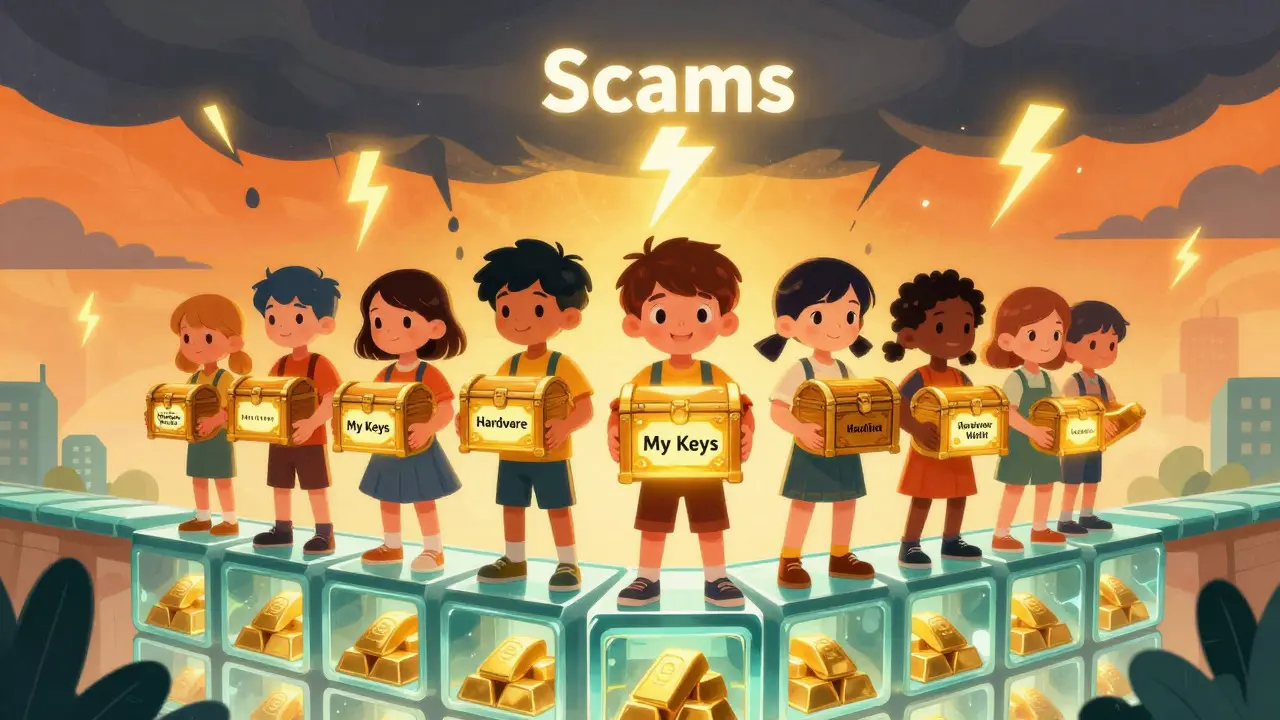
- Use Cold Storage: Don't leave large amounts on any exchange. Use a hardware wallet like Ledger or Trezor for long-term holding. Exchanges are for trading, not saving.
- Read Recent Reviews: Ignore the five-star reviews from two years ago. Look at reviews from the last three months. Are people complaining about withdrawals? Is support slow?
Final Thoughts on CoinField
CoinField serves as a cautionary tale. It showed us that a sleek interface and low fees mean nothing if the foundation is rotten. The platform promised convenience but delivered chaos. For those affected, it’s a painful lesson in due diligence. For everyone else, it’s a reminder: if something looks too good to be true, or if the regulatory picture is blurry, keep your money in your own wallet.
In 2026, we have better tools and stricter regulations than in 2018. Use them. Stick to established, transparent platforms. And never forget: Not your keys, not your coins.
Is CoinField still operational in 2026?
No. CoinField ceased effective operations in December 2023. It has been classified as an exit scam by major crypto watchdogs. Any websites currently using the CoinField name are likely fraudulent attempts to trick remaining users.
Can I withdraw my money from CoinField?
Most likely, no. Withdrawals were frozen during the collapse. Users have reported being unable to access funds or receive responses from support. There is no verified mechanism for mass refunds as of 2026.
Who founded CoinField?
The platform was associated with executives Surya Chowdhury and Alex Lightman. However, following the collapse, their whereabouts and current involvement remain unclear, adding to the difficulty of legal recourse for victims.
Is coinfield.us.com a legitimate replacement?
There is no credible evidence supporting the legitimacy of coinfield.us.com. It is widely suspected to be a secondary scam targeting victims of the original collapse. Exercise extreme caution and do not deposit funds there.
What are the safest crypto exchanges to use instead?
Reputable alternatives include Kraken, Coinbase, and Binance (depending on your region). These platforms provide regular proof of reserves, clear regulatory compliance, and have survived multiple market cycles without major insolvency events.