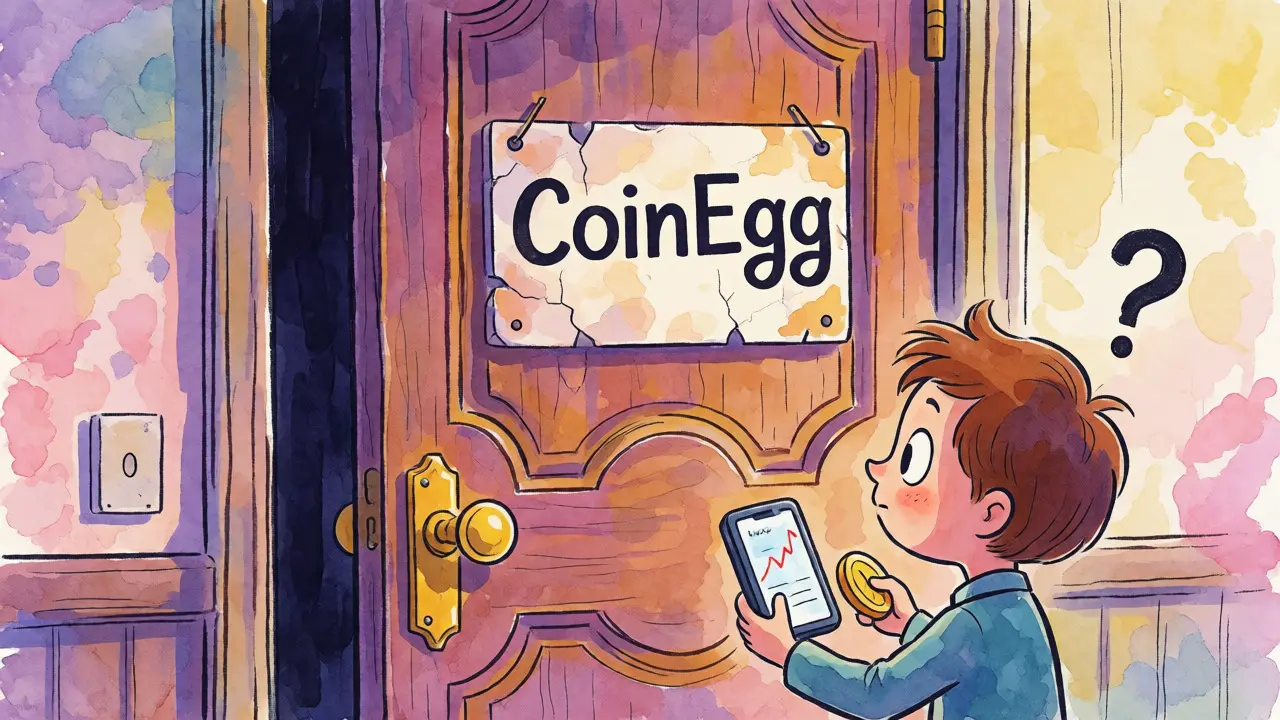
You might be looking at a screenshot of CoinEgg showing massive profits, or perhaps you just received an email inviting you to "restart" your account. Before you deposit another dollar, here is the hard truth: the original CoinEgg exchange ceased legitimate operations between late 2019 and early 2020. Today, any platform using this name is almost certainly a fraudulent clone running what cybersecurity experts call "pig-butchering" scams. If you are currently interacting with a site claiming to be CoinEgg in 2026, you are likely dealing with a sophisticated scheme designed to lock your funds behind fake withdrawal fees.
The Rise and Fall of the Original Platform
CoinEgg was a cryptocurrency exchange founded in 2017 by an anonymous team operating through CoinEgg Limited, a Seychelles-based entity. It launched during the height of the 2017-2018 bull run, positioning itself as a low-fee alternative to giants like Binance and Huobi. At its peak in January 2018, historical data from CoinCodex shows it processed approximately $15.7 million in daily trading volume. That sounds impressive until you compare it to Binance’s $1.2 billion on the same day. The platform supported 158 cryptocurrencies, offering pairs against BTC, ETH, USDT, and its own stablecoin, EUSD.
Technically, the old platform wasn't terrible for niche altcoin traders. It offered REST API v2.0 support and claimed to keep 95% of assets in cold storage. However, it lacked critical safety features that became standard later. There were no regulatory licenses from major jurisdictions like the FCA (UK) or SEC (US). This lack of oversight meant users had no insurance if things went wrong. And things did go wrong. In 2018, a security breach resulted in the theft of 1,270 ETH-worth about $486,000 at the time-from their hot wallets. This incident, documented on Etherscan, highlighted the risks of using unregulated, centralized platforms with single points of failure.
Why Did CoinEgg Shut Down?
The demise of the original CoinEgg wasn't sudden; it was a slow bleed caused by structural weaknesses and regulatory pressure. By 2019, the global landscape for crypto exchanges was tightening. China’s ban on exchanges forced many Asian-centric platforms to relocate, often to loose regulatory havens like Seychelles. While CoinEgg moved there, it failed to register as a Virtual Asset Service Provider (VASP) under FATF guidelines. This made it non-compliant in over 90% of major markets.
Liquidity was another fatal flaw. According to Kaiko’s 2018 Liquidity Report, CoinEgg’s liquidity depth was 87% lower than top-10 exchanges. For traders, this meant high slippage. If you tried to sell $5,000 worth of an altcoin, you might lose 1.2% just on the price difference because there weren't enough buyers. User complaints piled up regarding customer support, which averaged 16.3 days to resolve tickets. Eventually, the domain coinegg.com expired in February 2020, marking the official end of the legitimate service. Wayback Machine archives confirm that functional snapshots of the platform ended in November 2019.
The Modern CoinEgg Scam: What You Need to Know
If you encounter "CoinEgg" today, it is not the revived legacy brand. It is a ghost. Cybersecurity firms like TechForing and DataVisor have flagged multiple active domains impersonating the exchange, such as ceggcc.vip and coinegg-pro.com. These sites use the familiar branding to lure in unsuspecting investors who remember the old platform or newbies who think they found a hidden gem.
The primary tactic used by these modern clones is "pig-butchering." Here is how it typically plays out:
- The Hook: You are introduced to the platform via social media ads or dating apps. The interface looks professional, mimicking real trading charts.
- The Bait: You make small deposits and see rapid gains. You can even withdraw small amounts initially to build trust.
- The Squeeze: Once you deposit larger sums (often $5,000+), you try to withdraw. Suddenly, you face unexpected hurdles.
- The Trap: The platform demands a "verification tax," "upgrade fee," or "tax payment" before releasing your funds. This fee is often 15% of your balance. If you pay it, they invent another fee. If you don't, your account is frozen.
Data from InvestorWarnings.com indicates that in Q1 2024 alone, 214 victims lost a combined $1.8 million to CoinEgg-branded scams. The pattern is consistent: operators build trust over weeks, then lock the capital once the investment grows significant.

Comparing the Legacy vs. The Scam
Understanding the differences helps you spot the fakes. The original CoinEgg had specific technical limitations and user experiences that differ vastly from the current fraudulent entities.
| Feature | Original CoinEgg (Defunct) | Current Scam Clones (Active) |
|---|---|---|
| Status | Shut down in early 2020 | Active but fraudulent |
| Regulation | Unlicensed (Seychelles based) | No verifiable license; anonymous ownership |
| Withdrawals | Slow (days), but generally processed if limits met | Blocked indefinitely pending "fees" or "verification" |
| Fees | Flat 0.10% trading fee | Hidden fees, "verification taxes," arbitrary charges |
| User Support | Poor response times (weeks) | Non-existent or scripted chat bots |
| Main Risk | Security breaches and insolvency | Total loss of deposited funds (Pig Butchering) |
Red Flags to Watch For
How do you know if you are on a scam site? Look for these specific warning signs associated with the current CoinEgg impostors:
- Guaranteed Returns: Real crypto markets fluctuate. If a platform promises fixed high returns regardless of market conditions, it is a red flag.
- Mandatory Deposits for Withdrawal: Legitimate exchanges deduct fees from your balance. Scams ask you to send *more* money to release existing money.
- Anonymous Team: Check the "About Us" page. If the founders are listed as "Team CoinEgg" with no LinkedIn profiles or verifiable history, be skeptical.
- Domain Age: Use a WHOIS lookup tool. If the domain was registered recently (e.g., within the last year) but claims to be a long-standing exchange, it is likely a clone.
- Lack of Proof of Reserves: Post-FTX, reputable exchanges publish proof of reserves. Scam sites rarely provide transparent, third-party audited financials.
What Should You Do Now?
If you have funds stuck on a current "CoinEgg" platform, act quickly but carefully. First, stop all further deposits. Do not pay any more "withdrawal fees." Second, gather evidence. Take screenshots of your dashboard, transaction history, and any communications with support agents. Third, report the incident. In the US, file a complaint with the IC3 (Internet Crime Complaint Center) at ic3.gov. Include transaction hashes from your blockchain wallet, as these can help forensic analysts trace where your funds went.
Recovery is difficult. Dr. Kimberly Grauer from Chainalysis notes that impersonation exchanges have a near-zero survival rate beyond 18 months due to blockchain tracing. However, reporting helps authorities identify patterns and potentially freeze linked accounts. Be wary of "recovery services" that promise to get your money back for an upfront fee; many of these are secondary scams targeting already distressed victims.
Alternatives for Safe Trading
Since the original CoinEgg is gone, where should you trade? Look for exchanges with strong regulatory compliance and proven track records. Platforms like Coinbase, Kraken, and Binance offer fiat on-ramps, robust security measures, and clearer fee structures. While they may charge slightly higher fees than the old CoinEgg’s flat 0.10%, the peace of mind knowing your funds are held in insured or segregated accounts is worth the cost.
Always prioritize exchanges that offer two-factor authentication (2FA), cold storage for the majority of assets, and responsive customer support. Read recent reviews on independent platforms like Trustpilot, but filter for verified purchases or trades. Avoid platforms that only appear in aggressive social media advertisements without organic community discussion.
Is CoinEgg still open?
No, the original CoinEgg exchange ceased legitimate operations in early 2020. Any website currently using the CoinEgg name is likely a fraudulent clone or a scam operation unrelated to the original company.
Can I withdraw my money from CoinEgg?
If you are on a current scam site, withdrawals are usually blocked until you pay arbitrary "fees" or "taxes." These payments rarely result in fund release. If you are referring to the old platform, it has been shut down for years, so balances there are likely unrecoverable through normal channels.
Was CoinEgg a scam originally?
The original CoinEgg was a legitimate but risky unregulated exchange. It suffered from poor liquidity, security breaches, and bad customer support, leading to its collapse. However, it was not a Ponzi scheme in the traditional sense. The current versions branded as CoinEgg are scams.
How do I avoid crypto exchange scams?
Check for regulatory licenses, read independent reviews, verify domain age, and never pay extra fees to withdraw your own money. Use established exchanges with proof of reserves and avoid platforms promoted exclusively through social media influencers or dating app matches.
Who owns CoinEgg now?
The original entity dissolved. Current domains using the name are owned by various anonymous operators, often linked to organized cybercrime groups specializing in pig-butchering schemes. There is no single legitimate owner continuing the original business.