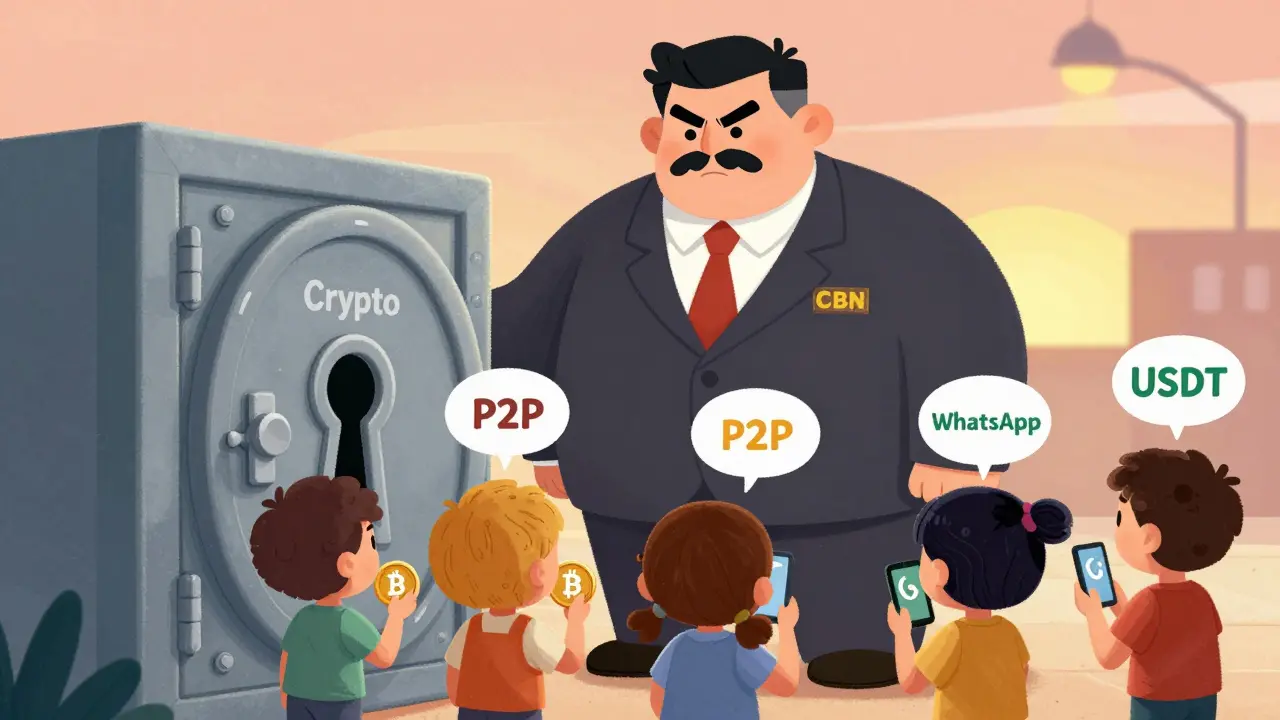
Back in 2017, the Central Bank of Nigeria (CBN) sent a clear message: don’t touch cryptocurrency. Banks were told to avoid any dealings with virtual currencies. No accounts. No transactions. No exceptions. At the time, it looked like Nigeria was about to shut the door on crypto forever. But what followed wasn’t a ban - it was a slow, messy, and ultimately unavoidable transformation.
The 2017 Warning That Started It All
The CBN’s first move wasn’t a ban. It was a warning. On January 12, 2017, the bank issued a circular to all financial institutions, telling them not to handle virtual currencies. The reasoning? Anti-money laundering and counter-terrorism controls. The message was simple: if you’re a bank, stay away. But the circular didn’t outlaw crypto itself. People could still buy, sell, and trade Bitcoin and other coins - just not through banks. That loophole became the foundation for Nigeria’s underground crypto economy.The 2021 Crackdown: Cutting Off the Lifeline
By 2021, the CBN went from warning to enforcement. On February 5, it sent a stricter letter to all deposit money banks and financial institutions. This time, the rules were brutal: close any accounts linked to cryptocurrency exchanges. Stop processing payments for crypto businesses. No gray area. No exceptions. The goal? To choke off the flow of money into crypto. And it worked - at first. Suddenly, Nigerian crypto traders couldn’t deposit naira. Couldn’t withdraw funds. Couldn’t use their bank accounts at all. The result? A massive shift to peer-to-peer (P2P) trading. People started meeting in person, using mobile money apps, or trading through WhatsApp groups. Crypto became a survival tool. During the 2020 EndSARS protests, when the government froze bank accounts of activists, crypto donations poured in. Bitcoin and USDT became the only way to fund rallies, pay lawyers, and support families. The CBN couldn’t stop it. And that scared them.The SEC Steps In: A Parallel Track
While the CBN was busy shutting banks down, another regulator was watching. The Securities and Exchange Commission (SEC) didn’t see crypto as a threat - it saw an asset class. In September 2020, the SEC released a statement saying digital assets that functioned like investments would be regulated under the Investments and Securities Act. That meant Bitcoin, Ethereum, and other tokens could be treated like stocks or bonds - if they met certain criteria. This created a split: one agency wanted to kill crypto. The other wanted to control it. The two agencies formed an inter-agency committee to figure things out. But for years, nothing changed. The CBN kept blocking banks. The SEC kept talking about regulation. And Nigeria’s crypto market? It grew anyway. By 2022, Nigeria had the highest rate of crypto adoption in Africa. Over 30 million people were using digital assets. The government couldn’t ignore it.
The Turning Point: December 2023
Then came the shift. In December 2023, the CBN dropped a bombshell: the Virtual Asset Service Provider (VASP) Guidelines. For the first time, banks were allowed to open accounts for crypto companies - if those companies were licensed by the SEC. It wasn’t just a policy change. It was a full 180-degree turn. The new rules required every crypto business to register with the SEC, follow strict KYC and AML rules, and prove they could track every transaction. No more anonymous trading. No more unregulated exchanges. If you wanted to operate in Nigeria, you had to play by the SEC’s rules. And suddenly, banks were back in the game. This change didn’t come out of nowhere. It followed the passage of the Investments and Securities Act 2025, which formally recognized digital assets as securities. That meant crypto wasn’t just tolerated - it was legally defined. Bitcoin, Ethereum, and others could now be classified as investment instruments. The SEC became the boss. The CBN stayed in charge of banks. And Nigeria got its first real crypto regulatory framework.The Fallout: Who Left? Who Stayed?
The years of restriction didn’t just confuse people - they scared off big players. OKX, one of the world’s largest crypto exchanges, pulled out in July 2024. In an email to Nigerian users, they said they were discontinuing services due to “recent changes in local laws.” That was ironic. The laws had just become more permissive. But OKX had already lost trust. They didn’t want to deal with the mess. Binance, the global giant, removed the Nigerian naira from its trading pairs. And in March 2024, reports surfaced that two Binance executives were detained over untraceable funds. The government was still suspicious. Even after the new rules, the fear of money laundering lingered. But not everyone left. Local exchanges like Laird and NairaEx adapted. They got licensed. They built KYC systems. They partnered with banks. And they started growing again. The market didn’t die - it evolved.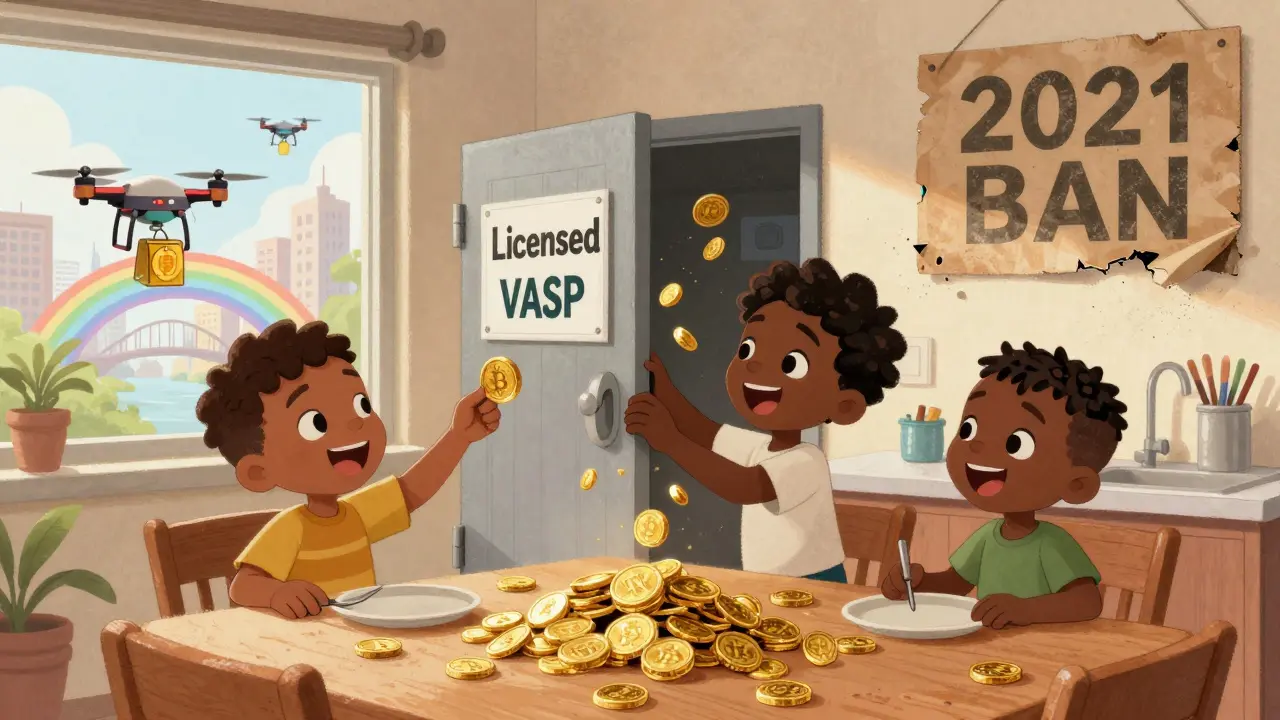
Why This Matters: Nigeria’s Global Position
Nigeria’s crypto story isn’t just about money. It’s about control. The government spent years trying to stop something it couldn’t control. And in the end, it realized that banning decentralized tech doesn’t work. People will always find a way. Now, Nigeria is one of the few African countries with a clear, structured crypto regulatory system. The SEC’s rules are strict, but they’re also transparent. That’s attracting foreign investors. It’s also helping Nigeria’s bid to get off the Financial Action Task Force’s Gray List - a list of countries with weak anti-money laundering controls. The CBN’s journey from warning to regulation shows something important: when people use a technology at scale, governments have to adapt. Not because they like it. But because they have to.What’s Next for Nigerian Crypto Users?
Today, if you want to trade crypto in Nigeria, you can do it legally. But you have to jump through hoops. You need to use a licensed exchange. You need to verify your identity. You need to prove where your money comes from. No more anonymous wallets. No more cash deposits through third parties. Banks are slowly reopening accounts for crypto firms. More fintechs are building crypto-integrated wallets. The naira is returning to trading pairs. And the number of daily crypto transactions is climbing again. But the tension hasn’t disappeared. In 2024, the government blamed crypto traders for foreign exchange volatility. They still worry about capital flight. They still fear losing control of the naira. So the rules might tighten again. Or they might loosen further. One thing’s certain: Nigeria won’t go back to 2021. The genie is out of the bottle.Did the Central Bank of Nigeria ever ban cryptocurrency?
No, the CBN never banned cryptocurrency itself. It banned banks and financial institutions from processing crypto transactions. People could still buy, sell, and hold crypto - they just couldn’t use their bank accounts to do it. That’s why peer-to-peer trading exploded. The ban was on banking access, not on ownership.
Is cryptocurrency legal in Nigeria today?
Yes, but only if you use a licensed provider. Since December 2023, crypto businesses must be registered with the Securities and Exchange Commission (SEC) under the Virtual Asset Service Provider (VASP) framework. Once licensed, they can legally operate, accept deposits, and even partner with banks. Unlicensed trading still carries risk.
Why did the CBN change its stance in 2023?
The CBN realized that blocking crypto didn’t stop it - it just drove it underground. With over 30 million Nigerians using crypto and billions in P2P trades happening every month, the government lost control. The 2025 SEC law gave them a way to regulate, not ban. Licensing became the new tool for oversight.
What role does the SEC play now?
The SEC is now the primary regulator for crypto in Nigeria. It licenses Virtual Asset Service Providers (VASPs), enforces KYC and AML rules, and classifies digital assets as securities under the Investments and Securities Act 2025. The CBN still oversees banks, but the SEC sets the rules for crypto businesses.
Can I open a crypto account at a Nigerian bank today?
Yes - but only if the crypto company you’re working with is SEC-licensed. Banks are now allowed to provide services to licensed VASPs. You can’t open a crypto account directly at a bank, but you can use a licensed exchange that has a banking relationship. Your funds will move through regulated channels.
Is Nigeria’s crypto market growing again?
Yes. After a dip during the 2021-2023 crackdown, trading volumes have rebounded. P2P volumes are rising, licensed exchanges are expanding, and foreign investors are returning. Nigeria remains Africa’s largest crypto market by user count and transaction volume.
The evolution of Nigeria’s crypto policy is a lesson in how governments adapt - or don’t. The CBN didn’t want to accept crypto. But when millions of people started using it anyway, the only smart move was to regulate it. That’s not a surrender. It’s a strategy.


ann neumann
March 13 2026They never banned crypto they banned BANKS from touching it because they knew the truth - crypto is the people’s rebellion against a system that’s been stealing from us for decades. The CBN thought they could stop it with a memo? Lol. Millions of Nigerians didn’t need permission to survive. When the government froze activist accounts during EndSARS, crypto didn’t just help - it saved lives. And now? Now they want to regulate it? Like that changes anything. The blockchain doesn’t care about your laws. It’s already won. You can’t un-invent decentralization. They’re just trying to put lipstick on a revolution and call it policy.