
Everyone loves free money, but in crypto, "free" often comes with fine print. If you've been eyeing the BlockSwap Network's recent buzz around its StakeHouse NFT airdrop, you might be wondering if it's worth your time or just another hype cycle. Here is the reality check: BlockSwap isn't just launching tokens; they are building infrastructure for how we stake Ethereum. The airdrop component is tied directly to their community engagement and early testing of their liquid staking protocols. Let's break down exactly what this means for your wallet and your portfolio.
What Exactly Is BlockSwap Network?
Before chasing an airdrop, you need to know what you're betting on. BlockSwap Network is a permissionless web3 infrastructure layer designed for multichain composable ETH and modular Ethereum blockspace. Think of it as the plumbing that allows different parts of the Ethereum ecosystem to talk to each other without friction. Their native token, CBSN, completed its Token Generation Event (TGE) back in April 2021. While that date feels like ancient history in crypto years, the project has continued evolving, focusing heavily on public benefit infrastructure for the Proof of Stake (PoS) ecosystem.
The core mission here is simple: onboard everyday users to PoS by providing stable yield. They aren't trying to reinvent Bitcoin; they want to make DeFi accessible to people who don't want to run a validator node themselves. This focus on mainstream adoption sets them apart from projects that only cater to hardcore developers. By connecting DeFi with the outside world, they aim to simplify the complex mechanics of staking into something anyone can use.
The StakeHouse Protocol: Liquid Staking Made Simple
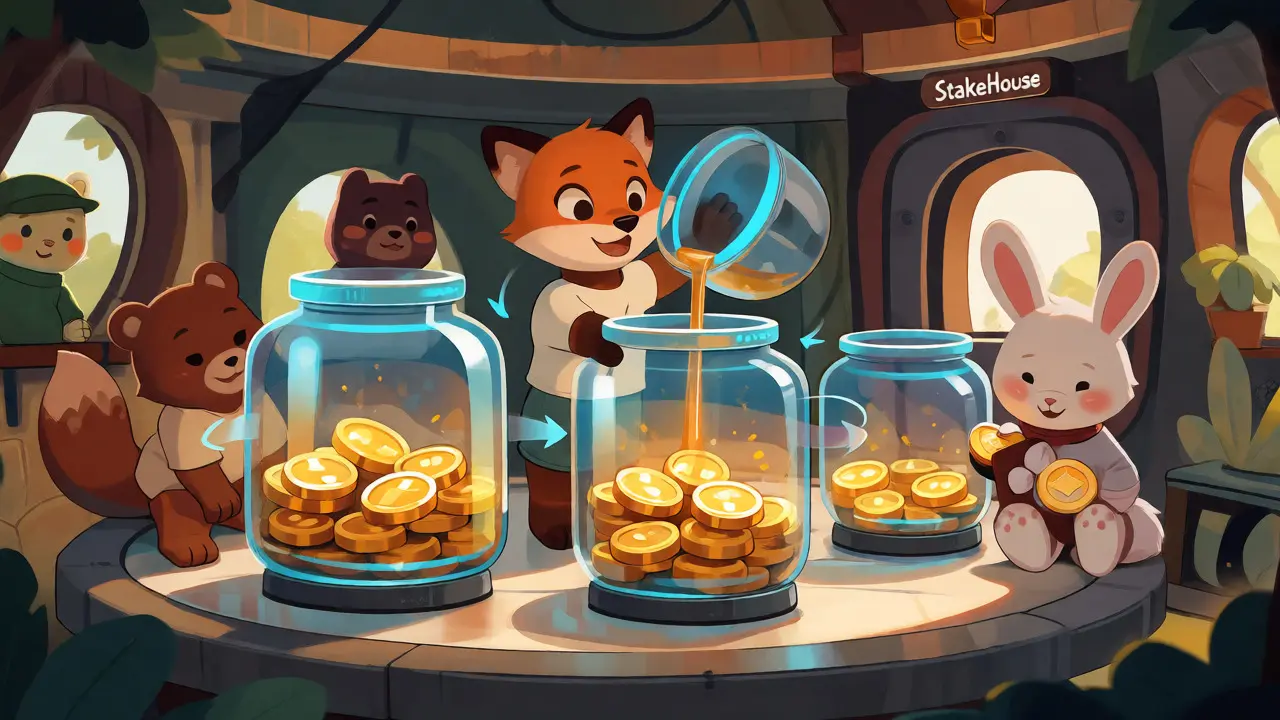
The heart of this operation is StakeHouse, a decentralized liquid staking platform built on smart contracts. Why does this matter? Because traditional staking locks up your assets. With StakeHouse, you get ERC20 tokens representing your staked ETH, allowing you to trade or use those assets while still earning rewards. It’s trustless automation at its finest.
Here is how the tech works under the hood:
- Automated Coordination: Smart contracts handle the messy coordination layer on Ethereum.
- Liquidity Access: Your staked ETH becomes accessible through standard ERC20 tokens.
- Trustless Design: No middlemen taking a cut or holding your keys hostage.
This setup solves one of the biggest pain points in crypto: illiquidity. Usually, when you stake, your money is stuck. StakeHouse lets you keep moving. For developers, this opens doors to build apps using these liquid assets. For regular users, it means you can earn yield without sacrificing flexibility.
Decoding the SHB Tokens and CommunityNet
You might have heard about StakeHouse Batch (SHB) tokens. These aren't just random coins; they serve as batch minters within the system. SHB tokens give holders native yield and exclusivity to mint batches for Stakehouses in the Blockswap CommunityNet.
Think of SHB as a key. It unlocks the ability to participate in specific stress-testing exercises for the protocol. Each batch represents a simulation of a 32 ETH deposit-the standard amount needed to run a validator. By using SHB, the team tests their contracts in real-time environments before full-scale deployment. Currently, SHB tokens aren't trading on major exchanges like CoinGecko, which suggests they are still in a private or semi-private phase of distribution. If you are holding these, you are likely part of the early adopter group helping shape the protocol's market fit.
The Reality of the NFT Airdrop Campaign
Now, let's talk about the StakeHouse NFT airdrop. Information specifically detailing a dedicated NFT-only airdrop is scarce compared to fungible token distributions. Most documented campaigns involve prize pools worth around $2,500 in cBSN tokens targeted at CommunityNet participants. Some sources mention ICOmarks listing a campaign offering 100 coins valued near zero USD, indicating these were likely testnet rewards or promotional giveaways rather than high-value windfalls.
So, where do the NFTs fit in? In many Web3 projects, NFTs serve as membership passes or proof-of-participation badges. If BlockSwap issues NFTs, they likely represent status within the StakeHouse ecosystem or grant access to exclusive features. Don't expect a Bored Ape Yacht Club-level frenzy right out of the gate. Instead, view these NFTs as potential utility tokens that could unlock future governance rights or premium staking tiers. Keep an eye on official channels because announcements for specific NFT drops often lag behind technical updates.

Tokenomics: CBSN Supply and Value
Understanding the numbers helps you gauge potential upside. The CBSN token has a total supply of 500 million, with a maximum cap set at 5 billion. Interestingly, current data shows zero circulating supply on some trackers, which can happen if tokens are locked in vesting schedules or not yet fully listed on spot markets. The project raised $7 million across four funding rounds, signaling investor confidence despite the broader market volatility.
| Metric | Value |
|---|---|
| Total Supply | 500 Million |
| Max Supply | 5 Billion |
| Funding Raised | $7 Million |
| TGE Date | April 26, 2021 |
The lack of immediate lock-ups during the TGE meant tokens were available instantly, which can lead to quick sell-offs if the product doesn't deliver value fast enough. However, the ongoing development of OpenSaver-a Universal Basic Saving mechanism offering 7% USD yield-suggests they are working hard to create real demand for the token.
Security and Risk Assessment
No discussion about DeFi is complete without talking about risk. BlockSwap takes security seriously, having undergone audits by reputable firms like Halborn, Solidified, Runtime Verification, and Certora. These aren't just names on a website; they are rigorous checks against smart contract vulnerabilities.
But remember, no audit makes a protocol bulletproof. Standard DeFi risks remain:
- Smart Contract Bugs: Even audited code can have edge-case failures.
- Market Volatility: The price of CBSN will swing with the broader crypto market.
- Regulatory Changes: Governments are still figuring out how to tax and regulate liquid staking derivatives.
If you are participating in the airdrop or buying the token, treat it as a high-risk investment. The mitigation strategy here relies on transparency and user education, both of which BlockSwap emphasizes in their documentation.
Is the BlockSwap Network StakeHouse NFT airdrop guaranteed?
Not necessarily. Airdrops in crypto are often discretionary based on user activity, such as participating in the CommunityNet or holding specific tokens like SHB. Always check the official BlockSwap social media channels for confirmed eligibility criteria before assuming you will receive a reward.
Can I trade StakeHouse Batch (SHB) tokens right now?
Currently, SHB tokens are not listed on major centralized or decentralized exchanges tracked by platforms like CoinGecko. They function primarily within the Blockswap CommunityNet for minting batches and stress-testing protocols. Liquidity may improve once the protocol reaches a more mature stage of deployment.
What is the difference between CBSN and StakeHouse tokens?
CBSN is the native governance and utility token for the entire BlockSwap Network ecosystem. StakeHouse-related tokens, like SHB, are specialized instruments used within the liquid staking module for specific functions like batch minting. CBSN provides broader network utility, while SHB is focused on staking operations.
How secure is the StakeHouse liquid staking protocol?
The protocol has been audited by multiple firms including Halborn and Certora. While these audits significantly reduce the risk of critical bugs, users should always be aware of inherent smart contract risks and the possibility of regulatory shifts affecting liquid staking products.
Why does CBSN show zero circulating supply?
Data discrepancies regarding circulating supply often occur due to tokens being held in vesting contracts, treasury wallets, or not yet fully distributed to the public market. It does not necessarily mean the token is dead, but rather that liquidity is restricted or data providers haven't updated their metrics recently.