
Most crypto exchanges claim to be decentralized. But how many actually let you keep full control of your funds, your orders, and your privacy? Block DX says it’s one of the few that does. No KYC. No central server. No middlemen. Just you and the blockchain. But in 2026, with dozens of DeFi platforms fighting for attention, is Block DX still worth your time-or just another hype-driven project?
What Makes Block DX Different?
Block DX isn’t just another DEX like Uniswap or SushiSwap. It’s built on something called the XBridge Protocol a proprietary decentralized infrastructure that handles funds storage, order books, matching, and settlement without any central authority. Most so-called decentralized exchanges still rely on centralized order books or custodial wallets. Block DX claims to eliminate all of that. Your funds never leave your wallet. Your buy and sell orders are stored and matched directly on the blockchain. Settlement happens peer-to-peer, no third party involved.This isn’t just marketing. The platform is open-source, meaning anyone can audit the code. That’s rare. Most DEXes publish their contracts, but few let you trace every part of the trading flow from order placement to final settlement. Block DX does. And it’s not just theoretical-it’s live. Users report trades executing in under 3 seconds on average, even during high network traffic.
The BLOCK Token: More Than Just a Currency
Everything on Block DX runs on its native token: BLOCK the utility token powering all services on the platform, required for fees, staking, and service node operation. You can’t trade on Block DX without paying fees in BLOCK. That’s intentional. It creates real demand for the token-not just speculation.Here’s the kicker: if you hold BLOCK, you can earn more BLOCK. The platform uses a proof-of-stake model where users who stake their tokens get rewarded for helping validate new blocks. For every block solved, the network distributes 1 BLOCK token to the staker. The more BLOCK you hold, the higher your chances of being selected to solve the next block. It’s not guaranteed, but it’s mathematically proportional.
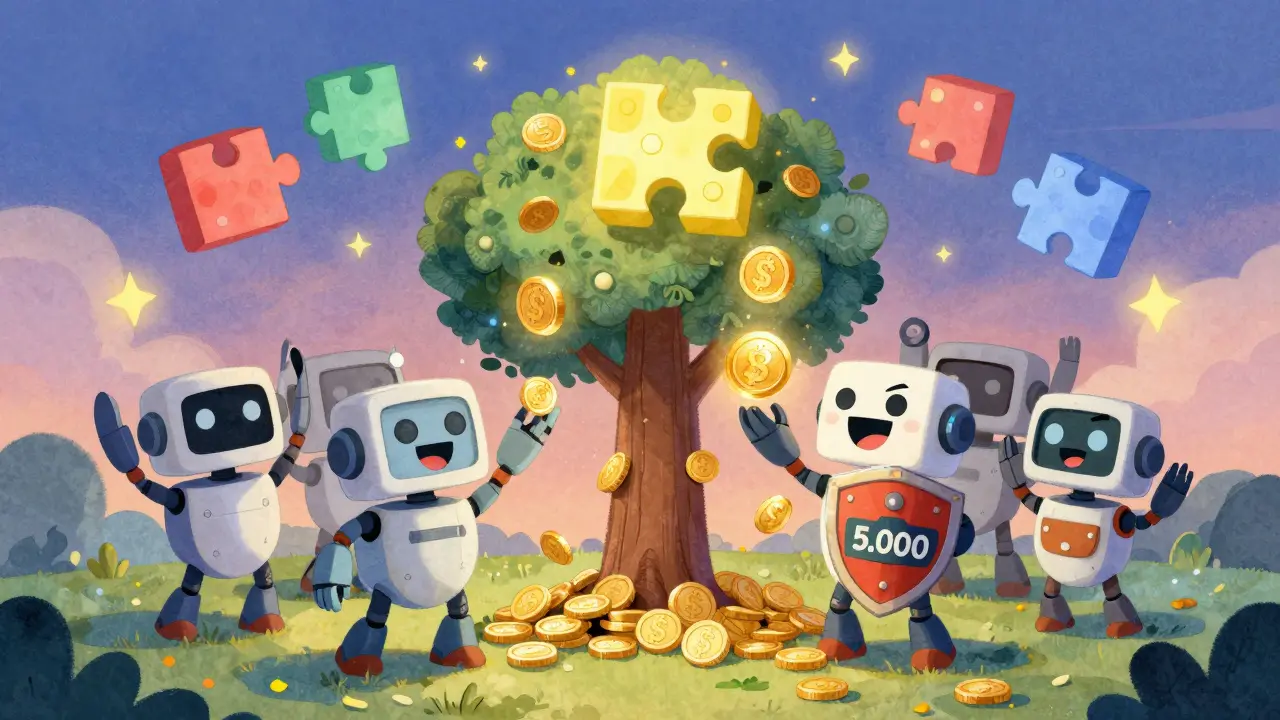
But there’s a tier. To run a service node-essentially a node that helps keep the network fast and reliable-you need at least 5,000 BLOCK tokens. That’s not a small amount. At current prices, that’s several thousand dollars. This isn’t for casual traders. It’s for serious participants who want to help maintain the network and earn ongoing rewards. It’s also a filter. It keeps out bots and low-liquidity actors who could slow things down.
How It Compares to Other Decentralized Exchanges
In 2026, the DEX landscape is crowded. SushiSwap a multi-chain DEX with over $100M daily volume, supporting Ethereum, Polygon, Arbitrum, and more dominates with liquidity and user-friendly interfaces. dYdX a leading decentralized perpetuals exchange focused on margin trading and derivatives offers advanced trading tools. IDEX a fast, order-book-based DEX with near-centralized speed but decentralized settlement feels almost like a centralized exchange, but with self-custody.Block DX doesn’t compete on volume. It competes on control. SushiSwap supports hundreds of tokens, but you still need to connect your wallet and approve each transaction. Block DX keeps everything inside your wallet. No approvals. No gas spikes from multiple confirmations. Just one click to trade.
Here’s how Block DX stacks up against key rivals:
| Feature | Block DX | SushiSwap | dYdX | IDEX |
|---|---|---|---|---|
| Funds Control | Full self-custody | Self-custody | Self-custody | Self-custody |
| Order Book | Decentralized | Automated Market Maker | Order Book | Decentralized |
| Trading Fees Paid In | BLOCK token only | ETH, MATIC, etc. | ETH, DYDX | IDEX, ETH |
| Staking Rewards | Yes (BLOCK tokens) | Yes (SUSHI) | Yes (DYDX) | No |
| Service Node Requirement | 5,000 BLOCK | None | None | None |
| KYC Required | No | No | No | No |
| Supported Chains | Primarily XBridge Protocol | Ethereum, Polygon, Arbitrum, Avalanche, Fantom | Ethereum, Starknet | Ethereum, BSC |
Block DX doesn’t support as many chains as SushiSwap. It’s not trying to. It’s focused on making one protocol work perfectly-fast, secure, and fully decentralized. That’s its strength. But it’s also its weakness. If you want to trade Solana or Avalanche tokens directly, you’ll need another platform.
Pros and Cons: Real Talk
Pros
- Zero KYC-no ID, no documents, no delays.
- Funds never leave your wallet. No hacks can steal what you don’t give up.
- Trading fees paid in BLOCK create real utility and demand for the token.
- Staking rewards give passive income without locking funds in liquidity pools.
- Open-source code means transparency. No hidden backdoors.
- Fast execution speeds, even under load.
Cons
- 5,000 BLOCK minimum to run a service node is a high barrier for most users.
- Limited token pairs compared to major DEXes. Not ideal for altcoin hunters.
- No fiat on-ramps. You need crypto already to use it.
- No customer support. If you lose your private key, your funds are gone forever.
- Low trading volume means higher slippage on large trades.
- Relies on a single protocol (XBridge). If it has a bug, the whole system is affected.
Let’s be clear: Block DX isn’t for everyone. If you’re new to crypto, you’ll find it intimidating. No chat support. No tutorials. No reset password. You need to know what you’re doing. But if you’re a seasoned trader who values privacy, hates KYC, and wants to avoid centralized exchanges that can freeze your account overnight-this might be the cleanest option left.
Who Should Use Block DX?
You should consider Block DX if:- You hold a significant amount of BLOCK tokens and want to earn staking rewards.
- You’re tired of centralized exchanges changing rules without warning.
- You believe in true decentralization and are willing to sacrifice convenience for control.
- You trade smaller amounts and don’t need deep liquidity.
- You’re in a country where crypto regulations are tightening, and you need a censorship-resistant platform.
You should avoid Block DX if:
- You’re new to crypto and need hand-holding.
- You want to trade hundreds of altcoins or meme tokens.
- You plan to deposit fiat directly and convert to crypto.
- You’re making large trades-slippage will hurt.
- You’re not comfortable managing private keys or seed phrases.
The Bigger Picture: Why Decentralized Exchanges Are Winning
In 2025, Bybit blocked margin trading for European users. Coinbase froze accounts for users in certain countries. Binance faced regulatory crackdowns worldwide. Every time a centralized exchange makes a policy change, thousands of traders panic. They’re not just losing access to a feature-they’re losing control over their own money.That’s why DEXes like Block DX are growing. Not because they’re perfect. But because they’re the only option that doesn’t require you to trust someone else. No CEO can shut you down. No government can force them to freeze your wallet. You own your keys. You own your trades. You own your future.
Block DX isn’t the biggest DEX. It’s not the flashiest. But in a world where trust is broken, it’s one of the few that actually delivers on the promise of decentralization.
Is Block DX safe to use?
Yes, if you understand self-custody. Block DX has no central server to hack, no database of user funds, and no KYC records to leak. Your funds stay in your wallet at all times. The platform’s open-source code has been audited by community developers, and there have been no major exploits reported since launch. But if you lose your private key, there’s no recovery. You’re responsible for your own security.
Do I need to stake BLOCK tokens to trade?
No. You can trade on Block DX with any amount of BLOCK tokens just to pay fees. Staking is optional and only required if you want to earn rewards or run a service node. To qualify for service node rewards and fee distribution, you need at least 5,000 BLOCK tokens. Most users trade without staking.
Can I buy BLOCK tokens on centralized exchanges?
Yes, BLOCK tokens are listed on a few major centralized exchanges like KuCoin and Gate.io. You can buy them with USD or BTC, then transfer them to your wallet to use on Block DX. However, the token is primarily traded on decentralized platforms, so liquidity is lower than top-tier coins like ETH or SOL.
What blockchains does Block DX support?
Block DX runs on its own protocol, XBridge, which is designed to be cross-chain compatible. Currently, it primarily supports Ethereum-based tokens (ERC-20) and assets from the XChain ecosystem. It does not natively support Solana, Cardano, or Tron tokens. Cross-chain swaps are possible through bridging tools, but they add complexity and risk.
How does Block DX make money?
Block DX doesn’t charge traditional fees. Instead, it takes a small percentage of every trade in BLOCK tokens, which are redistributed to stakers and service node operators. The platform is funded by the token’s utility-every trade increases demand for BLOCK. There’s no venture capital, no investor payouts. It’s a self-sustaining ecosystem driven by user activity.
Is Block DX better than Uniswap?
It depends on your goals. Uniswap is better for trading a wide variety of tokens with deep liquidity and a simple interface. Block DX is better if you want full control over your order book, no slippage from AMMs, and passive income from staking. Uniswap is easier for beginners. Block DX is better for advanced users who prioritize decentralization over convenience.


Jon Martín
January 10 2026Bro this is the real deal I’ve been waiting for years for a DEX that actually lets you breathe without some CEO deciding your wallet’s fate
No KYC no middlemen no drama just you the chain and your keys
I traded 12 BLOCK tokens last week and it settled in 2.1 seconds even with the network buzzing
They’re not trying to be Binance they’re trying to be free and that’s worth more than any liquidity pool