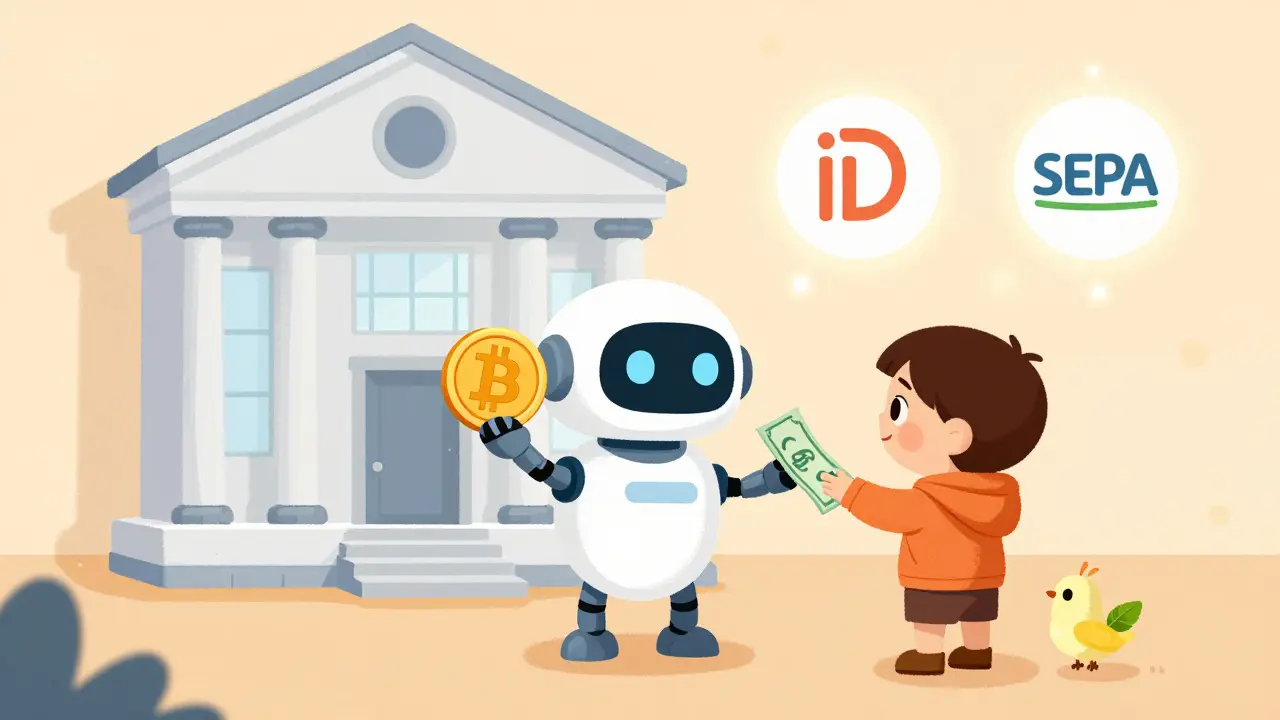
Bitonic isn’t another crypto exchange trying to sell you 200 different coins. It doesn’t have margin trading, NFT markets, or staking rewards. What it does have is one thing, done well: letting Europeans buy and sell Bitcoin with their bank accounts - simply, safely, and without surprises.
Launched in 2012 in Amsterdam as Idealcoin, Bitonic became the first Bitcoin-only company in the Netherlands. Over a decade later, it still operates under its original mission: make Bitcoin easy for regular people. No hype. No complexity. Just Bitcoin and euros.
How Bitonic Works (It’s Not Like Binance or Coinbase)
Most exchanges let you trade BTC for ETH, SOL, USDT, and dozens more. Bitonic only lets you trade BTC for EUR - and EUR for BTC. That’s it. There are no trading pairs. No order books. No candlestick charts.
When you buy Bitcoin on Bitonic, you’re not placing a limit order. You’re not guessing the right time to enter. You’re simply telling Bitonic: “I want €50 worth of Bitcoin.” They buy it for you at the average market price that day, then send it to your wallet. Same when you sell - you click “sell,” and they send euros to your bank.
This is called an automatic purchase system. It’s designed for long-term holders, not day traders. If you want to dollar-cost average into Bitcoin without worrying about timing, this is one of the cleanest ways to do it in Europe.
Fees: No Hidden Costs, Just a Clear Markup
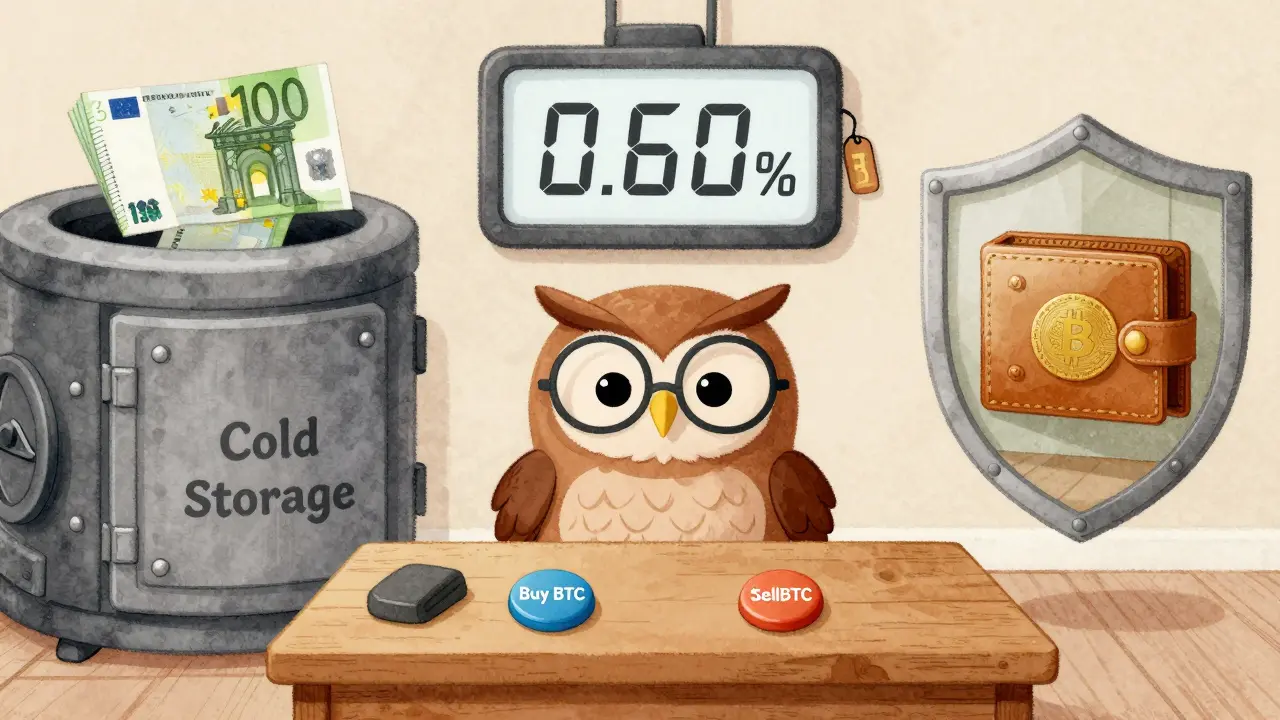
Bitonic doesn’t use the standard maker-taker fee model. Instead, it adds a small markup when you buy and takes a small markdown when you sell. Based on independent tests from 2020 and updated user reports in 2025, the effective fee is around 0.60% when buying BTC. That’s lower than many exchanges that charge 0.5% to 1.5% per trade.
Here’s what that looks like in practice:
- You send €100 to Bitonic.
- Bitcoin’s market price is €45,000 per BTC.
- Bitonic buys BTC at €45,000, then adds 0.6% - so you get BTC at €45,270.
- You receive 0.002209 BTC (€100 / €45,270).
When you sell, the same logic flips. Bitonic pays you slightly below market price. No surprise fees. No taker fees. No withdrawal fees. Just one clear number.
Deposit and Withdrawal Methods
Bitonic only accepts payments common in Europe:
- iDEAL (Netherlands)
- Bancontact (Belgium)
- SEPA bank transfers (EU-wide)
- Bitcoin (for deposits only - you can send BTC to your Bitonic wallet)
Withdrawals go out via SEPA or Bitcoin. Minimum deposit? €10. Minimum withdrawal? Also €10. No hidden thresholds.
There’s no credit card option. No PayPal. No Apple Pay. That’s intentional. Bitonic wants you to link your real bank account so they can verify your identity properly - which ties into their security model.
Security: Built from Scratch, Not Borrowed
Bitonic doesn’t use third-party custody services. They built their own infrastructure. Their cold wallets are air-gapped. Funds are split across multi-signature wallets. User accounts are segregated from company funds. All of this is confirmed by independent audits and review platforms like Blockspot and Cryptowisser.
They also don’t store private keys on servers. Every Bitcoin wallet is generated and signed offline. Even if their website gets hacked, your coins stay safe.
Bank verification is mandatory. You’ll need to upload ID and complete two small test deposits (under €1) to confirm your bank account. This takes 24-48 hours on average. Some users report delays up to 72 hours during busy periods. It’s not instant, but it’s standard for regulated platforms.
Who Is Bitonic For? (And Who Should Skip It)
Bitonic isn’t for everyone. Here’s who it works best for:
- Dutch, Belgian, or other EU residents who want to buy Bitcoin with their bank account
- People who want to invest small amounts regularly (€10-€500)
- Those who value simplicity over options
- Users who hate complex interfaces and trading charts
Here’s who should look elsewhere:
- Anyone wanting to trade altcoins (ETH, SOL, ADA, etc.)
- US-based users (Bitonic blocks American IPs)
- Traders who want leverage, futures, or margin
- People who need mobile app access (Bitonic has no app - only web)
- Those who want instant verification (bank checks take days)
Customer Support and User Experience
Bitonic doesn’t have 24/7 live chat. Support is available Monday-Friday from 09:30 to 20:30 GMT+2, and weekends from 10:00 to 18:00. You can reach them by email, ticket, Telegram, Twitter, or phone.
Response times? Around 2.3 hours on average during business days, according to mystery shopper tests in early 2025. Weekend responses are slower - only 42% of users rate weekend support as “satisfactory.”
The website is clean, fast, and in Dutch or English. No pop-ups. No ads. No confusing menus. You log in, click “Buy Bitcoin,” enter your amount, confirm your bank details, and done. It’s one of the easiest crypto interfaces out there.
The Bitonic Academy: Education Built In
Bitonic doesn’t just sell Bitcoin - they teach it. Their Bitonic Academy, developed in partnership with the Netherlands Ministry of Finance, offers 12 free courses on Bitcoin basics, security, taxes, and long-term investing.
These aren’t marketing fluff. They’re structured, fact-based lessons. One course explains how Bitcoin mining works. Another walks you through how to store private keys safely. There’s even a guide on Dutch tax reporting for crypto.
Over 15,000 people have completed at least one course. It’s rare for an exchange to invest this much in education - and it’s one reason why Bitonic has a 4.2/5 rating on Trustpilot from 387 verified reviews.

Market Position: A Niche Leader
Bitonic doesn’t compete with Binance or Coinbase. It competes with Bitcoin Meester and Bitcoin Centrale - two smaller Dutch exchanges with 24-hour volumes of €280,000 and €190,000. Bitonic’s volume? $1.4 million daily. That’s over 34% of the Dutch Bitcoin exchange market.
Why does this matter? Because in the Netherlands, Bitcoin accounts for 78% of all cryptocurrency transactions. Bitonic is built for that reality. It’s not trying to be global. It’s trying to be the best Bitcoin gateway for Europeans.
Future Updates: What’s Coming
In January 2025, Bitonic added four new courses to the Academy focused on long-term Bitcoin investing strategies. In February, they announced plans to integrate Tikkie - a popular Dutch peer-to-peer payment app - by Q3 2025. This will let younger users buy Bitcoin directly through their banking app.
They’re also expanding their OTC desk, which handles trades over €100,000. Around 120 institutional clients use it now - mostly Dutch businesses and private investors.
But there’s pressure. ABN AMRO, one of the Netherlands’ biggest banks, launched Bitcoin trading in January 2025 with a 0.5% fee - slightly lower than Bitonic’s 0.6-1.0%. That’s the first time a major bank has directly challenged Bitonic’s pricing.
Final Verdict: Simple, Safe, and Specialized
Bitonic isn’t the biggest exchange. It doesn’t have the most coins. It doesn’t have a mobile app. But if you’re in the Netherlands or another EU country and you just want to buy Bitcoin without overcomplicating it - this is one of the best places to do it.
Its strengths are clear: a decade of stable operation, rock-solid security, transparent fees, and a focus on education. Its weaknesses? Limited to Bitcoin, no app, slow verification, and no US access.
For beginners in Europe? It’s hard to beat. For traders looking for altcoins or leverage? Keep looking.
Is Bitonic safe to use?
Yes. Bitonic uses self-built infrastructure with cold storage, multi-signature wallets, and segregated accounts. It’s registered with the Netherlands Authority for the Financial Markets (AFM) and complies with EU’s AMLD5 rules. There have been no major security breaches since its launch in 2012.
Can I buy Bitcoin on Bitonic with a credit card?
No. Bitonic only accepts bank transfers via iDEAL, Bancontact, or SEPA. This is intentional - they require bank verification to comply with EU regulations and reduce fraud risk.
Does Bitonic support Ethereum or altcoins?
No. Bitonic only supports Bitcoin (BTC) transactions. You can’t buy, sell, or trade any other cryptocurrency on the platform. It’s designed as a Bitcoin-only gateway.
Is there a Bitonic mobile app?
No. Bitonic operates exclusively through its website. There is no iOS or Android app. This is a deliberate choice to maintain simplicity and reduce attack surfaces.
Can I use Bitonic if I live in the United States?
No. Bitonic blocks access from the United States, Russia, Belarus, and 15 other countries due to regulatory restrictions. You must have a bank account in the EU to use the service.
How long does bank verification take on Bitonic?
Bank verification typically takes 24-48 hours. Some users report delays up to 72 hours, especially during weekends or holidays. The process involves two small test deposits to confirm your bank account.
What are Bitonic’s fees for buying Bitcoin?
Bitonic charges an effective fee of approximately 0.60% when buying Bitcoin. This is a fixed markup above the market price - no hidden fees, no taker/maker charges, and no withdrawal fees.
Does Bitonic offer a savings plan or recurring buy feature?
Yes. Bitonic offers automatic recurring purchases. You can set up weekly or monthly Bitcoin buys as low as €10. Over 31% of users use this feature, according to Bitonic’s 2024 user report.


Sahithi Reddy
March 15 2026Bitonic is the only way I buy BTC. No app needed. No chaos. Just send euros, get bitcoin. Done.