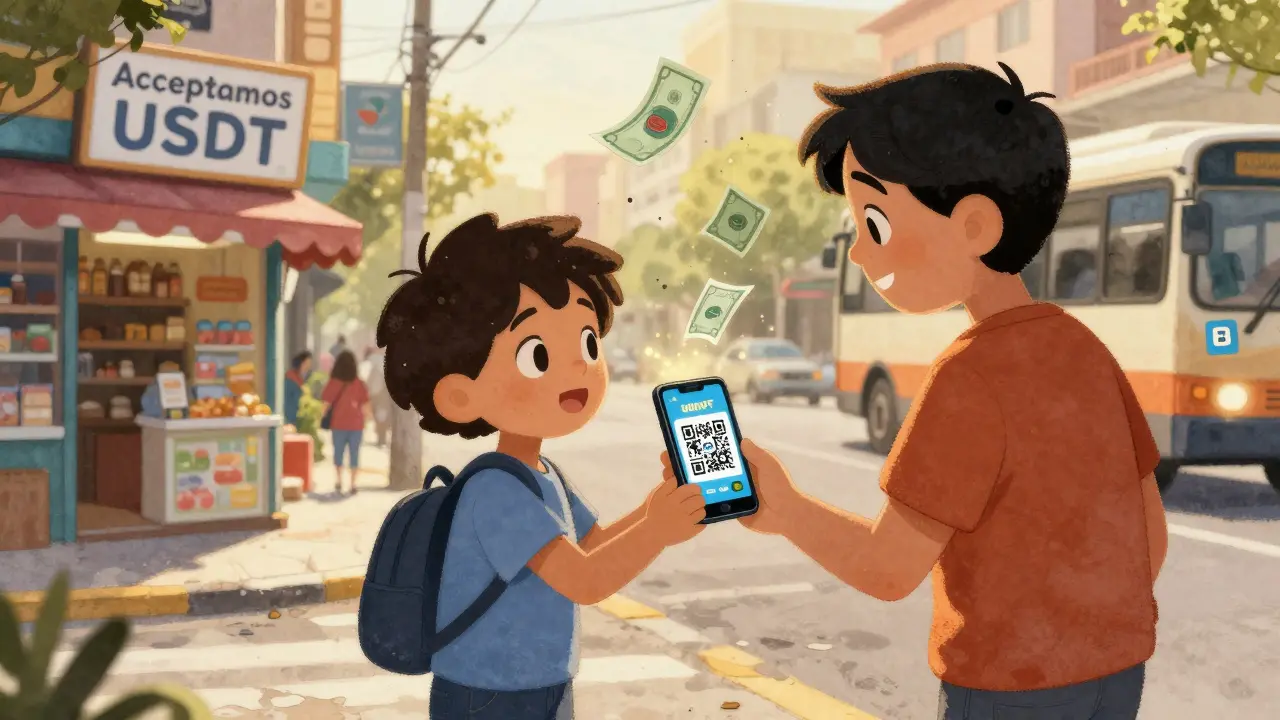
When the bolívar collapsed, Venezuelans didn’t wait for permission. They turned to Bitcoin and USDT - not because they loved crypto, but because they had no other choice. In a country where prices doubled every few weeks and bank accounts froze under U.S. sanctions, digital money became the only way to buy food, pay rent, or send money to family. Today, Bitcoin and stablecoins aren’t investments - they’re survival tools.
Why Bitcoin Took Off in Venezuela
Venezuela’s economic collapse wasn’t gradual. By May 2024, inflation hit 229% annually. The bolívar lost over 70% of its value in just eight months. Wages couldn’t keep up. Banks refused to process foreign currency transactions. ATMs ran dry. People couldn’t open accounts. The government’s own Petro cryptocurrency, launched in 2018, collapsed by 2024 after corruption scandals and zero real adoption. What filled the void? Bitcoin - and more importantly, Tether (USDT). Unlike Bitcoin, which can take minutes to confirm and swings in value, USDT is pegged to the U.S. dollar. It doesn’t fluctuate. It doesn’t vanish. It just works. Locals call it "Binance dollars." It’s the de facto currency in Caracas, Maracaibo, and Valencia. According to Chainalysis’ 2024 Crypto Adoption Index, Venezuela ranked 13th globally - but its growth was the fastest in Latin America. Year-over-year usage jumped 110%. Why? Because when your salary buys half a loaf of bread, you don’t care about speculation. You care about keeping value.How People Use Crypto Daily
You won’t find Bitcoin ATMs everywhere. But you’ll find people trading USDT on their phones - in parking lots, on street corners, inside small shops. A 2025 survey of 1,200 businesses in Caracas found that over 65% now accept cryptocurrency for everyday purchases: groceries, medicine, phone credit, even bus fares. It’s not a novelty. It’s routine. Here’s how it works:- A worker gets paid in bolívars - but the value evaporates by noon.
- They immediately convert part of it to USDT via Binance P2P or Airtm.
- They use that USDT to pay their landlord, buy groceries, or send money to relatives abroad.
- Merchants accept it because it holds value better than cash.
The Infrastructure Behind the Movement
This isn’t magic. It’s built on three things: P2P platforms, digital wallets, and sheer necessity.- P2P trading: Binance P2P handles 63% of Venezuela’s crypto volume. LocalBitcoins and Bisq make up the rest. These platforms let users trade directly - no bank needed.
- Digital wallets: Binance Wallet, Airtm, and Trust Wallet are used by an estimated 4.3 million Venezuelans - 13% of the population.
- Internet access: Only 45% of Venezuelans have reliable internet. Speeds average 14.79 Mbps (153rd globally). Transactions slow down. But people adapt. They wait. They use Wi-Fi at cafes. They trade in person with QR codes.
The Hidden Costs and Risks
Crypto isn’t perfect. It’s a bandage on a broken system.- Sanctions: U.S. sanctions block 18% of transactions. If your bank is on the OFAC list, Binance freezes your account. No warning. No appeal.
- Centralized control: Tether Limited controls 76% of Venezuela’s stablecoin market. If Tether freezes wallets or pulls USDT from circulation, the whole system shudders.
- Volatility during conversion: When you turn bolívars into USDT, the spread can hit 3.7%. You lose money just to get started.
- Rural exclusion: In the countryside, no internet = no crypto. People there still barter. They wait in lines. They rely on family networks.
Who’s Winning and Who’s Losing
This isn’t a level playing field.- Winners: Urban workers with smartphones, tech-savvy entrepreneurs, remittance senders. For them, crypto means dignity - the ability to provide, plan, and protect.
- Losers: The elderly, low-income families without smartphones, rural communities, and anyone who can’t navigate a wallet app. They’re left behind.

Is This Sustainable?
IMF economists say no - not unless Venezuela fixes its core problems: printing money, corruption, and collapsed production. "Digital assets provide tactical relief," said IMF Senior Advisor David Lipton in April 2025. "But they cannot substitute for sound monetary policy." Economist María Fernández from the University of Caracas put it bluntly: "Crypto doesn’t fix factories. It doesn’t bring back oil exports. It doesn’t create jobs. It just lets people survive a little longer." But here’s the twist: survival isn’t nothing. When your currency is worthless, the ability to pay your child’s school fees or buy insulin isn’t a luxury - it’s a revolution. Some experts believe Venezuela’s crypto economy could evolve into a formal parallel system - especially if BRICS countries help build alternative payment rails by 2027. Others warn that if the bolívar ever regains stability, people will abandon crypto overnight - leaving them exposed to Tether’s control.What’s Next?
By 2027, most economists agree: crypto won’t disappear. But its role might change.- If inflation stays above 50%, crypto stays essential.
- If the government stabilizes the bolívar, usage might drop - but not vanish. People won’t forget how crypto saved them.
- If U.S. sanctions tighten further, decentralized alternatives like Bisq or peer-to-peer mesh networks could grow.
Is Bitcoin legal in Venezuela?
Bitcoin isn’t officially recognized as legal tender, but it’s also not banned. The government shut down its own crypto regulator (SUNACRIP) in 2023, leaving the market in legal limbo. People use it anyway. Banks won’t touch it. U.S. sanctions block some transactions. But for daily life, Bitcoin and USDT are widely accepted - making them de facto currencies.
Why do Venezuelans prefer USDT over Bitcoin?
USDT is pegged to the U.S. dollar, so its value stays stable. Bitcoin swings wildly - sometimes 10% in a day. For people buying food or paying rent, that volatility is dangerous. USDT confirms in under two minutes on the Tron network. Bitcoin takes 10-60 minutes. USDT is faster, steadier, and easier to use for everyday transactions.
Can Venezuelans still use Binance?
Yes - but with limits. Binance P2P is the most popular platform in Venezuela. However, U.S. sanctions block transactions linked to sanctioned banks or individuals. About 18% of attempted trades fail due to these restrictions. Users must use non-sanctioned payment methods, like mobile top-ups or cash deposits, to bypass blocks.
How many Venezuelans use cryptocurrency?
An estimated 4.3 million Venezuelans - about 13% of the population - use digital wallets like Binance, Airtm, or Trust Wallet regularly. This number has grown sharply since 2023, driven by hyperinflation and bank failures. Chainalysis estimates over 110% year-over-year growth in crypto usage between 2023 and 2024.
What happens if Tether collapses?
If Tether Limited lost its dollar backing or froze Venezuelan wallets, the entire crypto economy in Venezuela would face a massive shock. USDT makes up 91% of all crypto transactions there. A collapse could trigger panic, price crashes, and loss of savings. That’s why some experts warn that Venezuela’s reliance on a single U.S.-based company is its biggest vulnerability.
Is crypto helping Venezuela’s economy recover?
No - not directly. Crypto doesn’t rebuild factories, fix oil pipelines, or stop inflation. It doesn’t create jobs. But it does let people survive. It enables trade, protects savings, and restores some control over finances. It’s not a solution - it’s a shield. Until the government fixes the root causes of the crisis, crypto will remain the only thing keeping the economy from total collapse.


Angela Henderson
February 17 2026It’s wild to think about how people just… adapt. Like, no one woke up one day and said, 'Hey, let’s ditch our currency and start using blockchain.' It was more like, 'My paycheck buys three eggs now, so I’m trying this thing my cousin told me about.' And now, entire neighborhoods run on QR codes and phone apps. I used to think crypto was for speculators or tech bros, but seeing how Venezuelans use it-like, literally to buy milk or pay their kid’s doctor-makes it feel less like a financial trend and more like human ingenuity. It’s not glamorous. It’s not pretty. But it’s real.
And honestly? I don’t know if I’d have the guts to do the same. I’d probably just panic and start hoarding canned beans.
Also, the fact that USDT on Tron confirms in two minutes while Bitcoin takes 60? That’s not a technical detail-that’s a life-or-death difference when you’re trying to feed someone before the store closes.