
You’re looking for a new place to trade your crypto. You want low fees, fast swaps, and maybe some extra rewards for holding tokens. That’s exactly what Ballswap is a decentralized exchange (DEX) on the Ethereum blockchain that promises community rewards through its native BSP token. But before you connect your wallet, you need to know the truth. The DeFi space is crowded with giants like Uniswap and PancakeSwap. Where does Ballswap fit in? Is it a hidden gem, or is it just another risky project with thin liquidity?
This review cuts through the hype. We’ll look at the numbers, the security risks, and the real user experience. If you are planning to trade large amounts or value stability above all else, this platform might not be for you. But if you are curious about niche DEXs and willing to take on higher risk for potential rewards, here is everything you need to know.
What Is Ballswap and How Does It Work?
Ballswap launched its mainnet in late 2022. It operates as an Automated Market Maker (AMM) on the Ethereum network. This means it doesn’t use an order book like traditional exchanges. Instead, it relies on liquidity pools provided by users to facilitate trades. Your native currency here is the BSP token, an ERC-20 token.
The core promise of Ballswap is different from most competitors. While platforms like Uniswap charge fees that go primarily to liquidity providers, Ballswap claims to distribute 45% of transaction fees to BSP token holders. This is their "community reward" model. In theory, if you hold BSP, you earn passive income just by owning the token. However, this only works if there is significant trading volume on the platform. Low volume means low fees, which means tiny rewards for holders.
To use the platform, you don’t need to create an account. There is no KYC (Know Your Customer) process. You simply connect a compatible wallet like MetaMask, Trust Wallet, or Coinbase Wallet. The interface is straightforward: select your input token, choose your output token, and swap. It sounds simple, but the devil is in the details of execution.
Liquidity and Trading Experience: The Hidden Costs
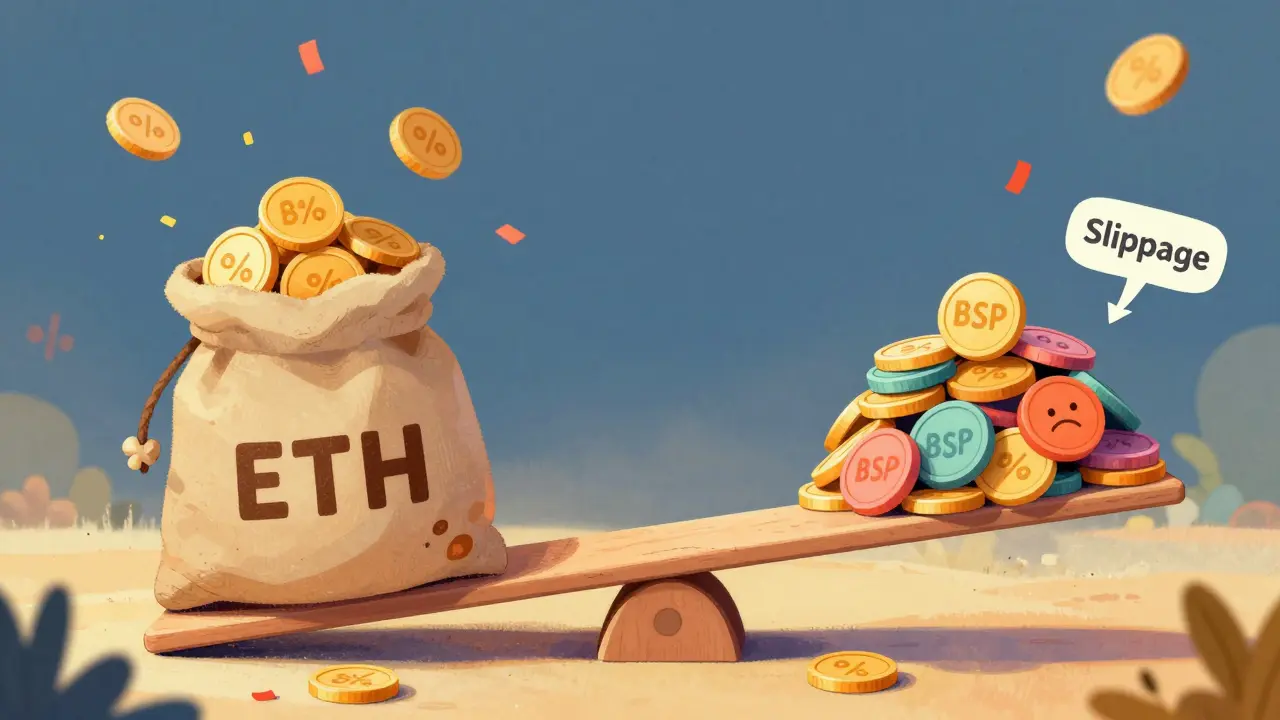
Here is where many users get burned. Liquidity is the lifeblood of any DEX. Without deep pools, you face high slippage. Slippage is the difference between the price you expect and the price you actually get. On major exchanges, slippage is often below 0.1%. On Ballswap, recent data shows average slippage rates around 2.8%.
Let’s put that in perspective. If you try to swap $500 worth of ETH for BSP, you might lose $14 or more just due to price impact and gas fees. One user reported losing $28 on a $500 trade. For small trades under $50, this might be negligible. But for anything larger, the costs add up quickly. As of mid-2024, Ballswap supports only seven active trading pairs. This limited selection restricts your ability to move assets efficiently without hopping across multiple bridges or exchanges.
| Feature | Ballswap | Uniswap | PancakeSwap |
|---|---|---|---|
| Network | Ethereum | Ethereum + L2s | BSC + Others |
| Total Value Locked (TVL) | ~$8.7 Million | ~$5.2 Billion | ~$1.1 Billion |
| Average Slippage | 2.8% | 0.35% | 0.5% |
| Fee Sharing to Holders | Yes (45%) | No | Partial (Burn/Buyback) |
| Market Share | < 0.05% | ~58% | ~15% |
The table above highlights the stark contrast. Uniswap commands over half the DEX market share. Ballswap holds less than one-twentieth of one percent. This lack of volume directly impacts your trading efficiency. If you are a day trader or someone who moves large sums of capital, Ballswap is likely not suitable for your needs. It is better suited for micro-trades or speculative plays on the BSP token itself.
Security Risks and Smart Contract Audits
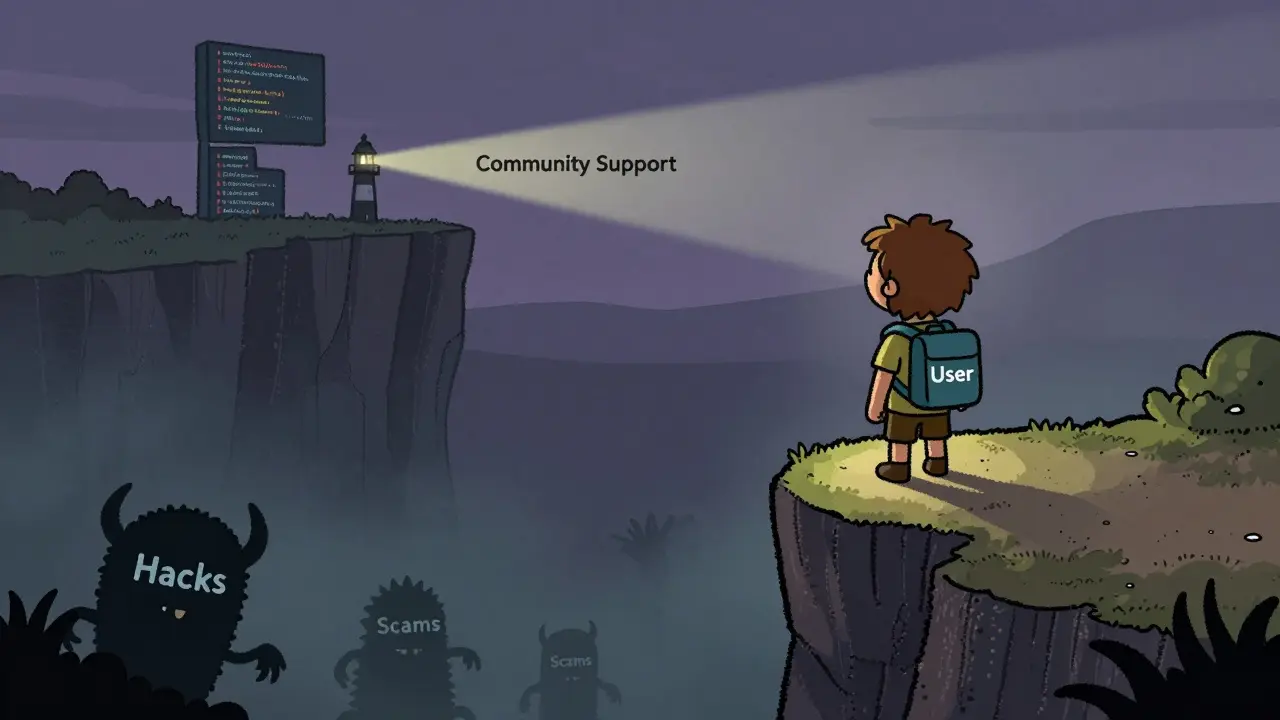
When you interact with a DEX, you are trusting code, not people. Security is non-negotiable. Unfortunately, Ballswap has a significant gap here. As of early 2024, there are no publicly verifiable smart contract audits from reputable firms like CertiK, OpenZeppelin, or Hacken. The platform claims to have undergone internal checks, but in the world of DeFi, "internal" rarely means "secure."
DeFi safety experts have flagged this as a medium-to-high risk. Without independent audits, vulnerabilities could exist that malicious actors might exploit. Additionally, token concentration is a major red flag. Data from Etherscan shows that the top 10 wallets control approximately 68.3% of the total BSP supply. This centralization creates a risk of manipulation. If these large holders decide to sell simultaneously, they could crash the price instantly, leaving retail investors with worthless tokens.
Furthermore, because Ballswap operates without KYC, it exists in a regulatory gray area. With regulations like the EU’s MiCA coming into full effect in 2025, platforms that cannot prove compliance may face restrictions or bans. While this doesn’t affect you directly today, it adds uncertainty to the platform’s long-term viability.
User Experience and Support
For beginners, the learning curve can be steep. Connecting your wallet is easy, but managing gas fees on Ethereum requires knowledge. Gas fees fluctuate based on network congestion. During peak times, a simple swap on Ballswap could cost you $5 to $6 in gas alone, plus the slippage we discussed earlier. This makes small transactions economically unviable.
If you run into issues, help is hard to find. Ballswap does not offer live chat support. Users must rely on email or their Telegram community. Reports indicate an average response time of 38 hours for email inquiries. Compare that to Uniswap’s 4-hour average, and you see the difference in maturity. The Telegram group has about 2,800 members, which is small compared to the thousands of daily messages seen in larger communities. This means if you have a problem, you are largely on your own.
The documentation is described as "basic but functional." There are no video tutorials or comprehensive guides for advanced features. If you are new to DeFi, you might find yourself stuck trying to figure out why a transaction failed or how to approve token spending limits.
Is Ballswap Worth Using in 2026?
By May 2026, the landscape will have shifted further. Ballswap announced plans for a "BSP 2.0" migration and cross-chain functionality in 2024. Whether these features materialized successfully is key. Cross-chain support would allow users to trade on cheaper networks like Arbitrum or Optimism, reducing gas fees significantly. If this update was successful, it could improve usability. If it was delayed or buggy, trust would erode further.
Currently, Ballswap serves a very specific niche: users who believe strongly in the BSP token’s appreciation and want to participate in its fee-sharing model. It is not a general-purpose exchange. Do not use it as your primary gateway for entering or exiting crypto positions. Use established platforms like Uniswap, SushiSwap, or Curve for those tasks.
If you decide to use Ballswap, follow these rules:
- Start Small: Never trade more than you can afford to lose. Test with $10-$20 first.
- Check Gas Fees: Use tools like EIP Fee Dashboard to ensure Ethereum is not congested.
- Verify Contracts: Always double-check the contract address on official channels to avoid phishing scams.
- Expect Slippage: Set your slippage tolerance appropriately (often 3-5% for this platform) to prevent failed transactions.
The consensus among analysts remains cautious. Most view Ballswap as a high-risk, low-reward proposition for trading purposes. Its survival depends entirely on community loyalty rather than technological superiority. In a market dominated by giants with billions in liquidity, Ballswap is fighting an uphill battle.
Is Ballswap a scam?
There is no definitive evidence that Ballswap is a scam in the sense of a "rug pull" where developers steal funds and disappear. However, it carries high risk due to lack of audits, concentrated token ownership, and low liquidity. These factors make it unsafe for large investments.
How do I connect MetaMask to Ballswap?
Go to the official Ballswap website. Click "Connect Wallet" in the top right corner. Select MetaMask from the list. Ensure your MetaMask network is set to Ethereum Mainnet. Approve the connection request in your wallet popup.
Why is my transaction failing on Ballswap?
Transactions often fail due to insufficient gas fees or incorrect slippage settings. Increase your gas limit in MetaMask settings. Also, increase your slippage tolerance to 3-5% to account for price volatility during the swap.
Can I stake BSP tokens?
Ballswap’s model focuses on rewarding holders via fee distribution rather than traditional staking contracts. Check their latest dashboard for any new staking pools, but historically, rewards come from holding the token in your wallet while trading occurs on the platform.
What is the best alternative to Ballswap?
For Ethereum-based trading, Uniswap is the safest and most liquid option. If you want lower fees, consider Layer 2 solutions like Arbitrum or Optimism, or use Binance Smart Chain-based exchanges like PancakeSwap.