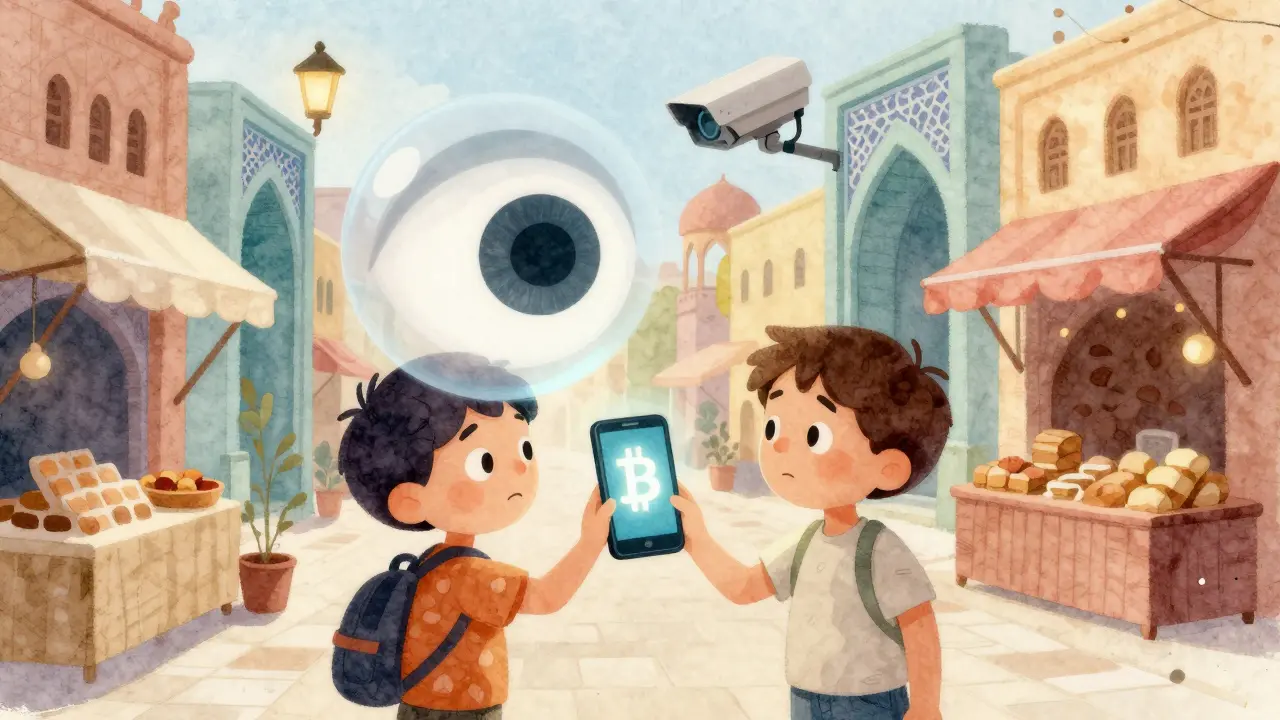
Imagine trying to buy a coffee with Bitcoin in Tehran. You pull out your phone, open your wallet, and scan the QR code. Does the transaction go through? Or does it get flagged by a government algorithm before you even take a sip?
The short answer is: it’s complicated. As of mid-2026, crypto payments for everyday goods and services are effectively prohibited in Iran. However, buying, selling, and holding cryptocurrencies is legal under strict surveillance. This distinction creates a confusing landscape where you can own digital assets but struggle to spend them without triggering regulatory alarms.
To understand why this is the case, we need to look at the dramatic shifts that occurred between late 2024 and early 2025. The Iranian government didn’t just ban crypto; they tried to co-opt it. They wanted the revenue from mining and the utility for sanctions evasion, but they feared the loss of control over the national currency, the rial.
The Shift from Ban to Surveillance (2024-2025)
If you were watching the news in December 2024, things looked bleak. On December 27, 2024, the Central Bank of Iran (CBI) implemented a hard block on all internet-based cryptocurrency-to-rial transactions. Essentially, if you used a website to swap your Bitcoin for rials, the payment gateway would fail. It was a total blackout designed to stop capital flight and speculative trading that was weakening the local currency.
But then, the strategy changed. In January 2025, President Masoud Pezeshkian issued a directive that reversed the complete ban, replacing it with a regime of total transparency. The CBI regained unblocked access to exchanges, but with a catch: every single platform had to use the government’s API system.
This means that while you can now legally trade crypto for rials again, the state sees everything. Every transaction, every user ID, and every balance change is visible to authorities. The goal wasn't to liberate the market; it was to bring the shadow economy into the light so the government could tax it, monitor it, and prevent large-scale capital outflows.
Can You Use Crypto to Buy Goods and Services?
Here is where the rubber meets the road. Just because you can trade crypto for rials doesn't mean you can pay your landlord or buy groceries with Ethereum.
In February 2025, the Iranian government imposed a nationwide ban on cryptocurrency advertising. No online ads, no billboards, no social media promotions. This move signaled a clear intent: keep the general public away from crypto speculation. By limiting exposure, the government aims to reduce the number of citizens using crypto as a hedge against inflation.
For merchants, the situation is equally restrictive. Direct peer-to-peer (P2P) payments for goods are not supported by licensed banks or payment processors. If a shop owner accepts Bitcoin directly, they are operating outside the formal banking system. While small-scale informal acceptance might happen in black-market circles, any business wanting to remain compliant must convert crypto to rials first, through a licensed exchange, and then process the sale via traditional banking channels. This adds friction, fees, and time, making crypto impractical for daily commerce.
| Activity | Legal Status | Key Restrictions |
|---|---|---|
| Buying/Selling Crypto | Legal | Must use licensed exchanges; full data sharing with CBI required. |
| Paying for Goods/Services | Effectively Prohibited | No official payment gateways support direct crypto checkout for retail. |
| Cryptocurrency Mining | Legal (Licensed) | Requires Ministry license; high electricity tariffs; must sell output to CBI. |
| Advertising Crypto | Banned | No online or physical promotion allowed since Feb 2025. |
| Using Foreign Exchanges | Restricted | Many sites blocked; users often rely on VPNs, which carries legal risk. |
The Mining Loophole: Why Iran Loves Bitcoin Miners
While spending crypto is discouraged, producing it is encouraged-under strict conditions. Iran legalized cryptocurrency mining in 2019, recognizing it as a way to generate foreign currency revenue amidst heavy international sanctions. Today, Iran accounts for approximately 4.5% of global cryptocurrency mining activity.
However, this isn't a free-for-all. To mine legally, you need a license from the Ministry of Industry, Mine and Trade. You must use approved hardware and, crucially, you must sell your mined coins directly to the Central Bank of Iran. This ensures the state captures the value generated by its cheap electricity.
The cost of doing business has risen sharply. Licensed miners face high energy tariffs, which have made many operations financially unsustainable. Consequently, a significant portion of Iran's mining happens underground. In December 2024, rolling power outages plagued multiple regions, with authorities blaming unauthorized Bitcoin mining farms for straining the electrical grid. This led to raids on illegal operations and calls for harsher judicial penalties.
The tension here is clear: the government needs the revenue from mining but hates the energy drain. This results in a cycle of licensing, crackdowns, and re-regulation that keeps miners on edge.

The Rise of the Digital Rial
Why does the Iranian government care so much about controlling crypto payments? Part of the answer lies in their alternative: the Digital Rial. Unlike decentralized cryptocurrencies like Bitcoin, the Digital Rial is a Central Bank Digital Currency (CBDC). It cannot be mined, and its supply is controlled entirely by the state.
Pilot programs for the Digital Rial began on Kish Island, aiming to create a domestic digital payment system that reduces dependency on the US dollar and bypasses international financial sanctions. For the average Iranian, the Digital Rial offers a state-sanctioned way to make fast, low-cost digital payments without the volatility or regulatory risks of Bitcoin.
This explains the hostility toward private crypto payments. If people use Bitcoin to buy bread, the central bank loses visibility into monetary flow. If they use the Digital Rial, the bank retains total control. The push for CBDC adoption is a direct counter-strategy to the growth of decentralized finance in the region.
Sanctions Evasion and International Pressure
We cannot discuss crypto in Iran without addressing sanctions. Since 2017, when international sanctions severely restricted Iran's access to the global financial system, cryptocurrencies became a vital tool for bypassing these restrictions. Businesses and individuals used Bitcoin and stablecoins to conduct cross-border trade that traditional banks refused to touch.
This has drawn intense scrutiny from the West. On July 2, 2025, Tether-the issuer of the USDT stablecoin-froze 42 cryptocurrency addresses linked to Iran, involving millions of dollars. Many of these addresses had substantial exposure to Nobitex, one of Iran's largest local exchanges. This action demonstrated that even within the "legal" framework of Iranian exchanges, international compliance pressures can shut down liquidity instantly.
The involvement of powerful entities like the Islamic Revolutionary Guard Corps (IRGC) in crypto activities has further complicated matters. IRGC-linked wallets are specifically targeted by international compliance actions, meaning that any association with these entities can lead to frozen assets and blacklisting.

How Iranians Navigate the Gray Area
So, how do ordinary people manage? With ingenuity and caution. Between January and July 2025, Iran recorded $3.7 billion in total cryptocurrency flows, an 11% decline from the previous year due to tighter regulations. Yet, the demand remains high.
Many Iranians use Virtual Private Networks (VPNs) to access foreign exchanges that are blocked domestically. This allows them to trade on platforms like Binance or Kraken, avoiding the mandatory data-sharing requirements of local exchanges. However, this is a double-edged sword. Using a VPN itself exists in a legal gray area, and if caught, users face potential fines or device confiscation.
Others stick to local exchanges like Nobitex, accepting the lack of privacy in exchange for convenience and lower risk of account freezing by international entities. These platforms enforce strict Know Your Customer (KYC) checks and Anti-Money Laundering (AML) protocols, ensuring that every transaction is traceable back to an individual.
For those looking to hedge against the rial's depreciation, crypto remains one of the few accessible options. But it is not a seamless experience. It requires navigating a maze of licenses, surveillance, and technical workarounds.
What This Means for Business and Travelers
If you are a foreign business looking to trade with Iran, assume that direct crypto payments will not work smoothly. You will likely need to engage with licensed intermediaries who can handle the conversion to rials or other fiat currencies through sanctioned-compliant channels. Be aware that your counterparties may be subject to secondary sanctions if they are linked to restricted entities.
If you are traveling to Iran, do not expect to use your crypto wallet for daily expenses. Bring cash (euros or dollars) and exchange it for rials locally. While some tech-savvy vendors might accept crypto informally, it is rare, risky, and potentially illegal for both parties. Stick to traditional payment methods to avoid unnecessary complications.
The future of crypto in Iran depends on the balance between economic necessity and political control. As long as sanctions persist, the demand for alternative financial tools will grow. But as long as the state fears losing monetary sovereignty, the regulatory grip will remain tight. For now, crypto in Iran is a tool for preservation and speculation, not for everyday spending.
Is it illegal to own cryptocurrency in Iran?
No, owning cryptocurrency is not illegal in Iran. You can buy, sell, and hold digital assets like Bitcoin and Ethereum. However, all transactions must go through licensed exchanges that share data with the Central Bank of Iran. Unlicensed trading or using unapproved platforms can lead to legal issues.
Can I use Bitcoin to pay for goods in Iranian shops?
Generally, no. Direct peer-to-peer payments for goods and services are not supported by official payment systems. Merchants are expected to use the national banking system or the emerging Digital Rial. While informal acceptance might occur in black markets, it is risky and lacks legal protection for both buyers and sellers.
Why did Iran ban cryptocurrency advertising in 2025?
The ban on cryptocurrency advertising, implemented in February 2025, aims to limit public exposure to crypto markets. The government wants to curb speculative trading that destabilizes the rial and encourage the use of state-controlled financial instruments like the Digital Rial. By restricting marketing, they hope to reduce new entrants into the volatile crypto market.
Is cryptocurrency mining still profitable in Iran?
Mining is legal but highly regulated and increasingly difficult. Licensed miners must pay high electricity tariffs and sell their output to the Central Bank. While Iran has abundant cheap energy, recent price hikes and strict quotas have squeezed profit margins. Many miners operate illegally to avoid these costs, risking shutdowns during energy shortages.
What is the Digital Rial and how does it differ from Bitcoin?
The Digital Rial is Iran's Central Bank Digital Currency (CBDC). Unlike Bitcoin, which is decentralized and mined by individuals, the Digital Rial is issued and controlled by the Central Bank of Iran. It functions as electronic cash, offering fast transactions without the volatility of cryptocurrencies. Its primary goal is to maintain monetary control and reduce reliance on foreign currencies.
Can foreigners use crypto to send money to Iran?
It is technically possible but fraught with risk. Due to international sanctions, many global exchanges block Iranian IP addresses and freeze accounts linked to Iran. Sending crypto to an Iranian address may result in frozen funds, especially if the recipient is associated with sanctioned entities. Most cross-border transfers now rely on complex intermediary networks rather than direct blockchain transactions.